AK · USA — delivered from Surrey, BC
Tiny Homes for Sale in Alaska
Alaska is the one state where our location counts in our favour. We build in Surrey, BC, which sits on the highway and barge routes north, not three thousand miles from them. The regulatory picture is local in a stronger sense than anywhere else we deliver: there is no statewide residential building code, because the standards the state adopts under AS 18.70.080 reach only commercial buildings and residential buildings of four or more dwelling units, so a house, a duplex or a triplex is outside them. Which code and which zoning apply is decided by your borough or city, and in the unorganized borough there is no borough government to decide. Anchorage adopts the 2024 International Residential Code including the tiny house appendix and allows an accessory dwelling unit in every residential zoning district; the Fairbanks North Star Borough has adopted no building code, so outside the cities of Fairbanks and North Pole no building permit is required there, although a zoning permit still is. Where local enforcement stops, financing often brings the standards back: an Alaska Housing Finance Corporation loan carries the state building code standards and a five-stage inspection with it. Design here is its own discipline: real seismic demand in the south and southcentral, deep frost and frost-susceptible soils, and snow loads taken from the adopted local figures rather than a generic table. KYRAX delivers into Alaska by highway or barge.
US buyers: certification for your market is written into the build contract. See how certification works and US financing.
01 — Models available here
Models Available in Alaska
Now taking reservations
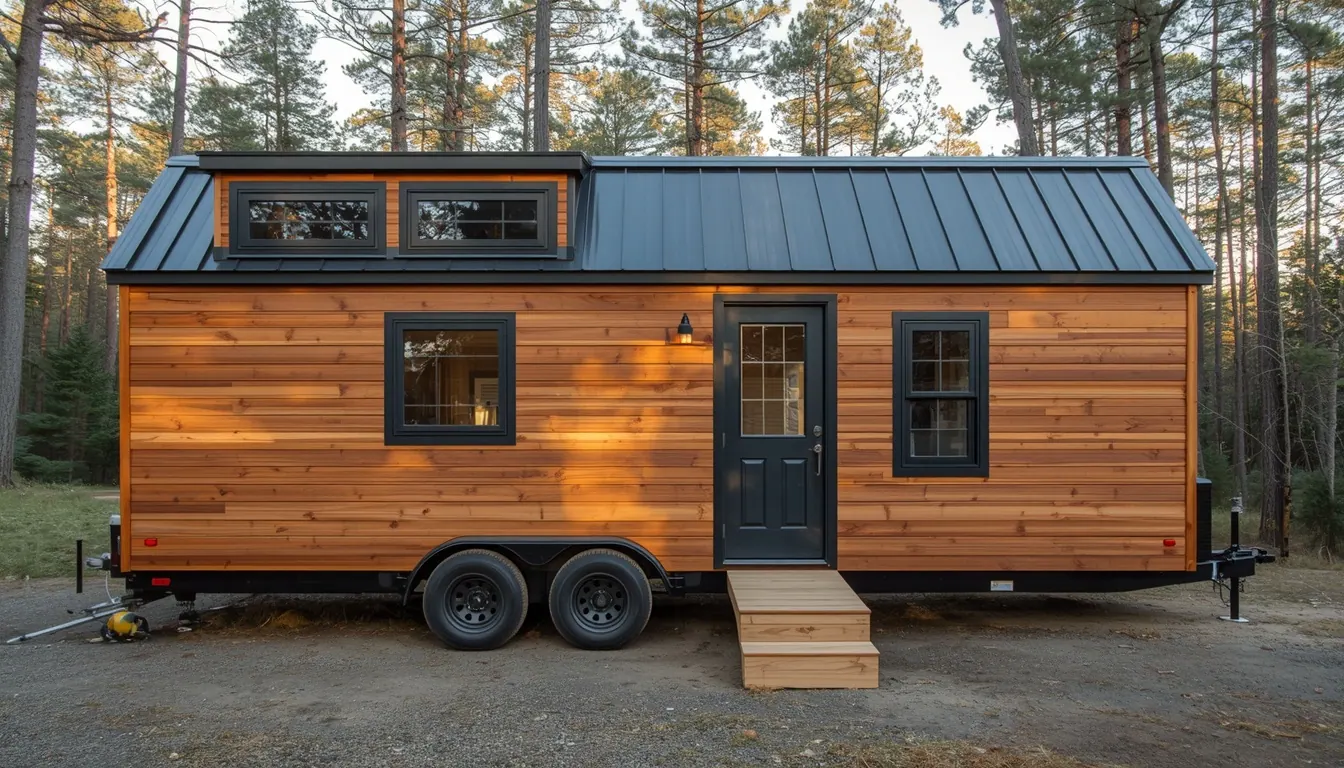
Vale
8'6" × 24' · ~284 sq ft · Sleeps 2 · 1 bed + loft
RVIA/NOAH + NHTSA
10–12 weeks · weekly photos
From $119,900 CAD
Indicative starting price in CAD. Your final USD price is confirmed at your consultation.
See the full model page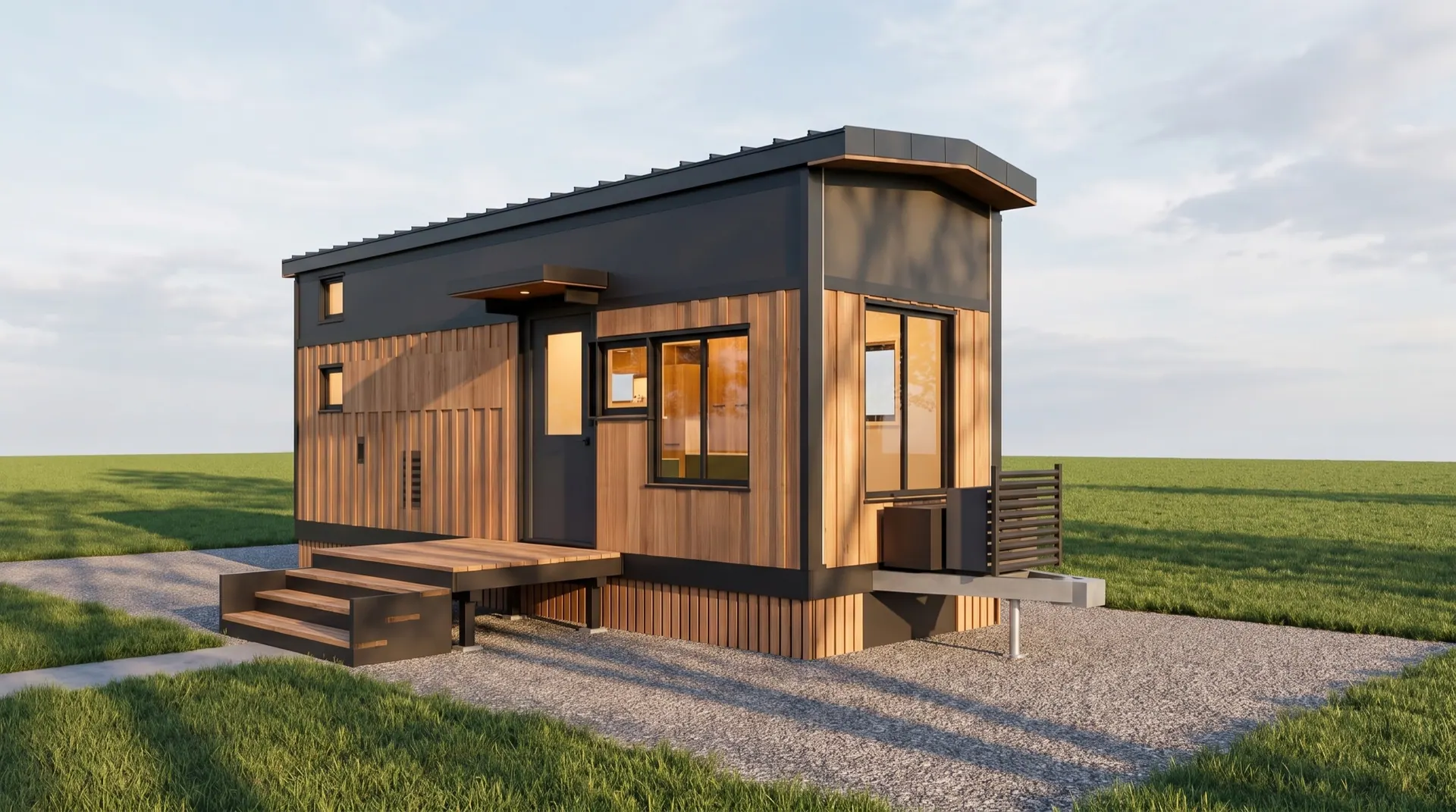
8'6" × 28'
RVIA/NOAH + NHTSA
Launch pricing announced at consultation · join the waitlist
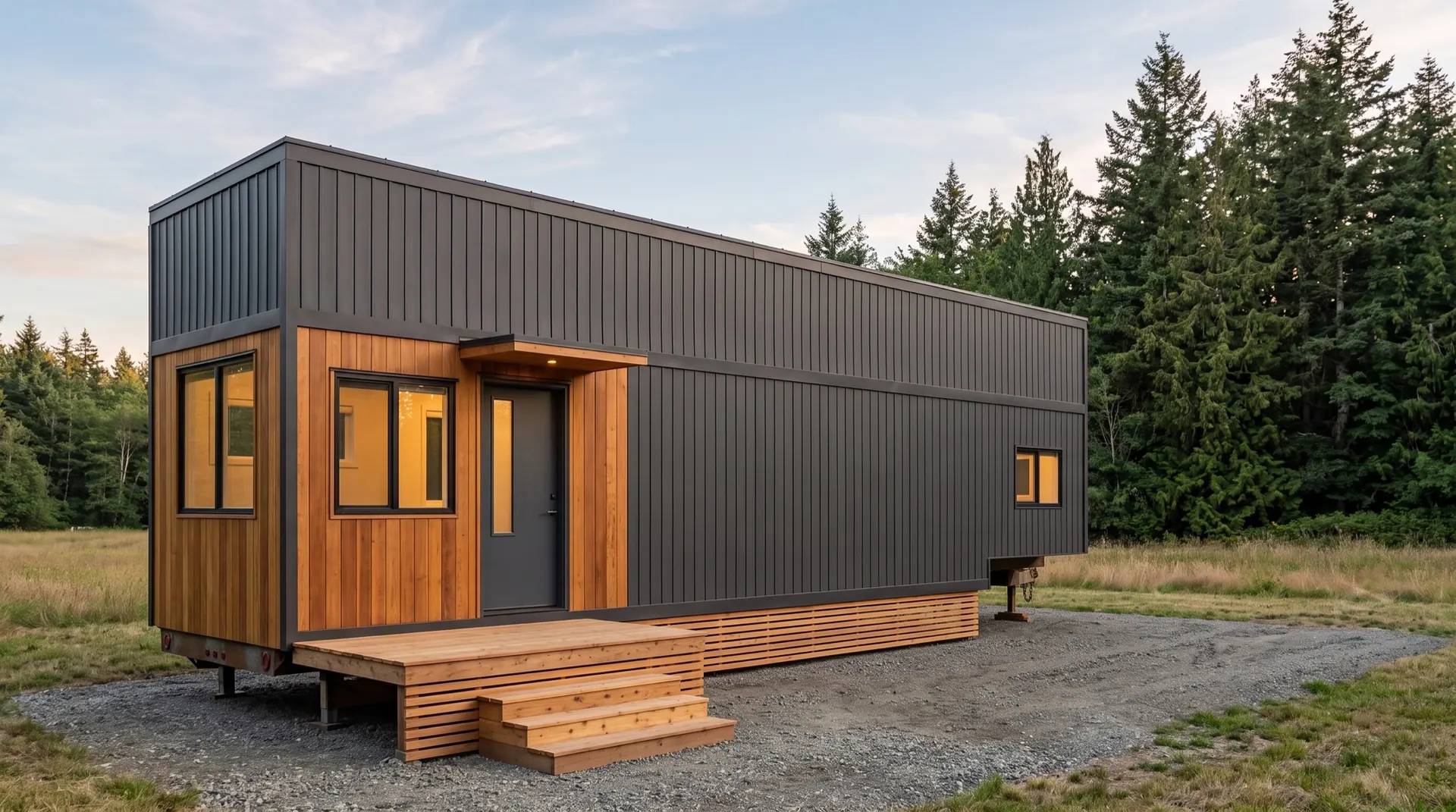
8'6" × 38' gooseneck
RVIA/NOAH + NHTSA
Launch pricing announced at consultation · join the waitlist
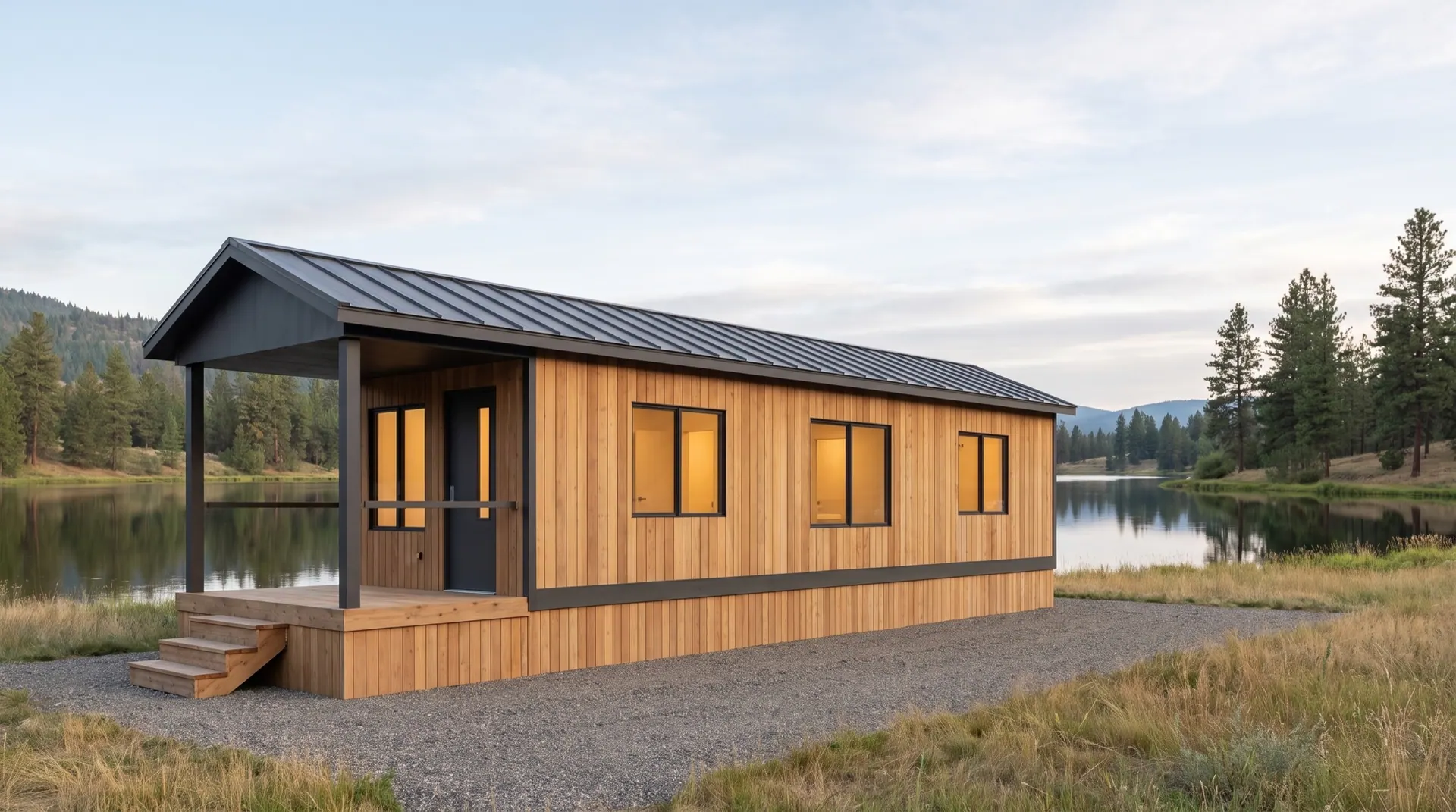
10'6" × 36'
ANSI A119.5 park model
Launch pricing announced at consultation · join the waitlist
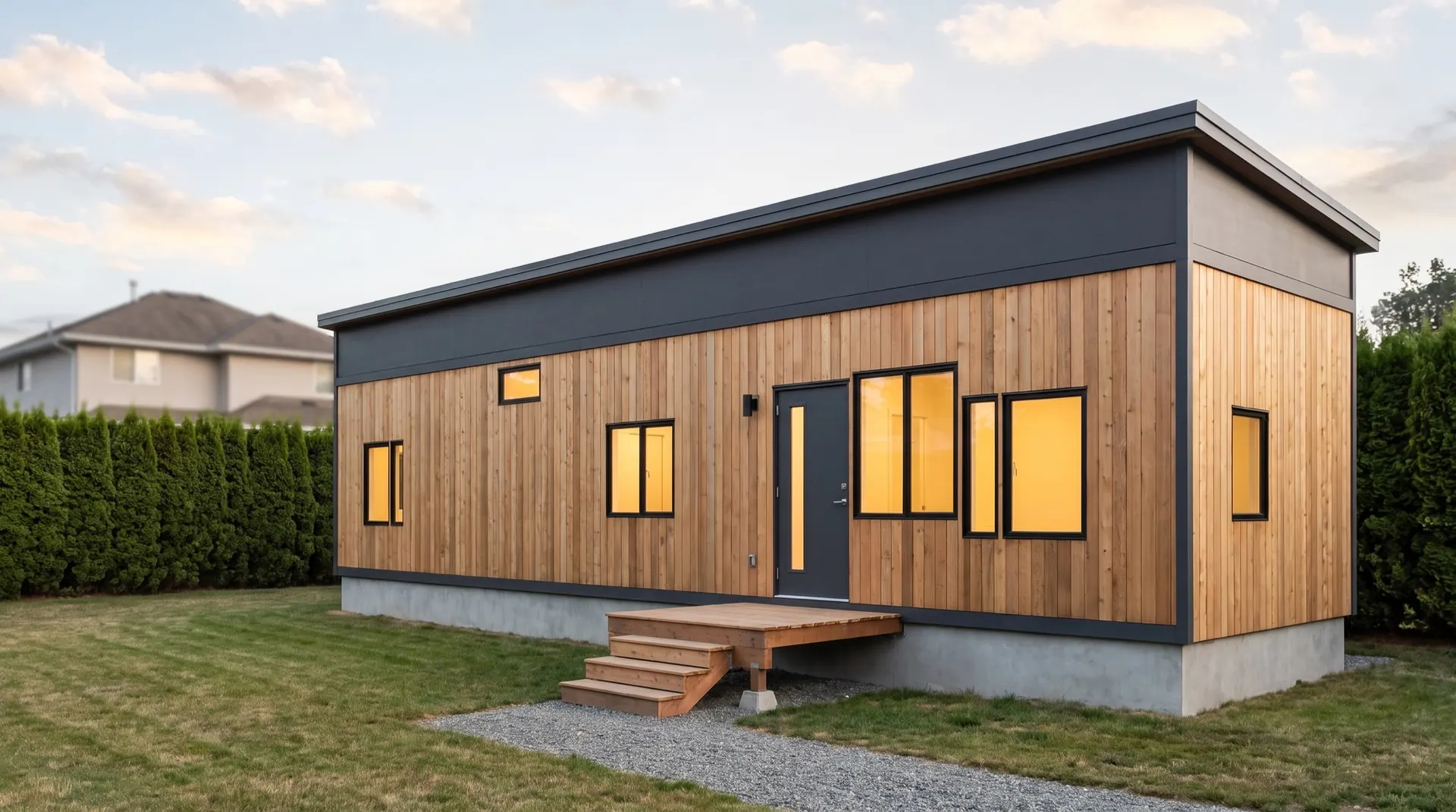
12' × 44'
IBC/IRC modular
Launch pricing announced at consultation · join the waitlist
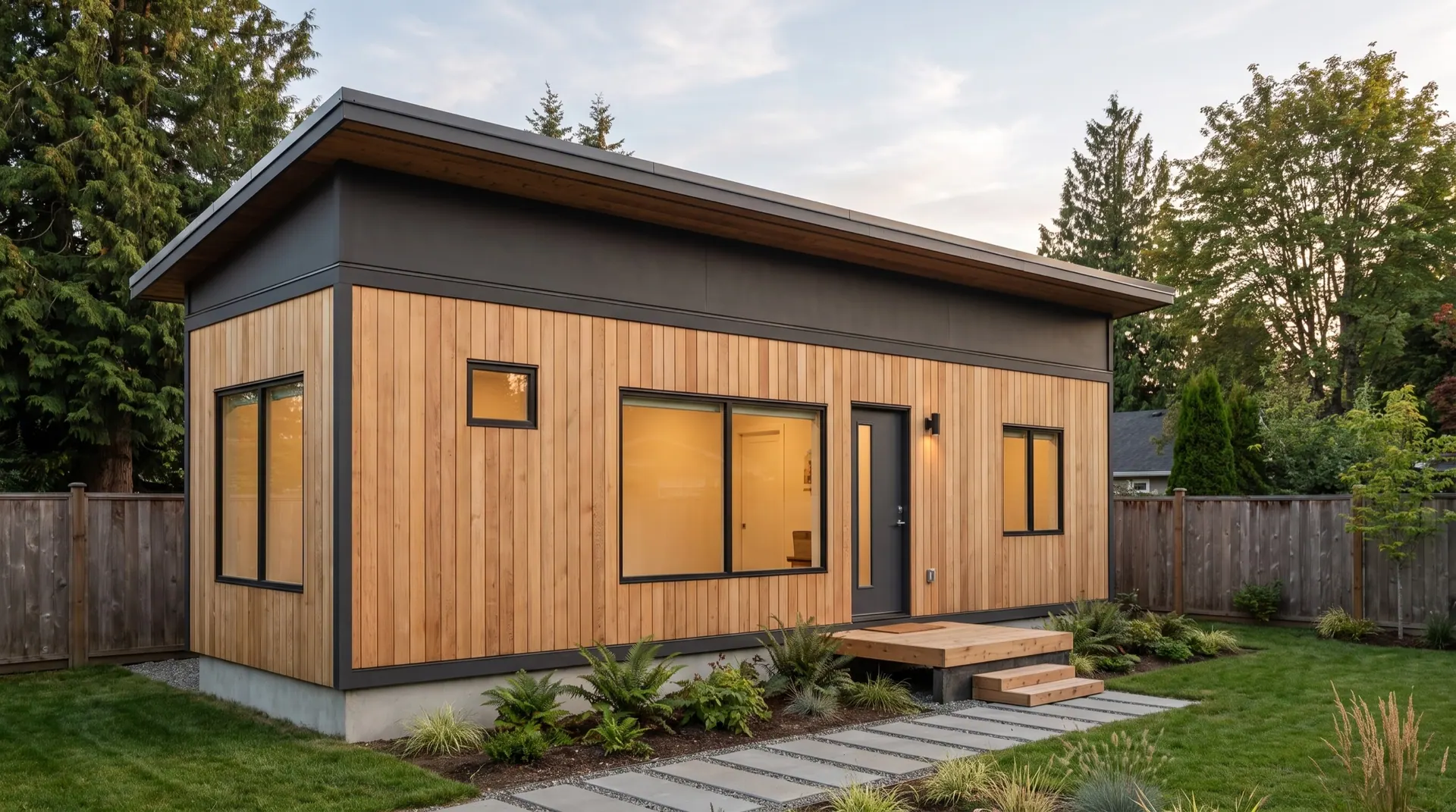
10' × 32'
IBC/IRC modular + Appendix Q
Launch pricing announced at consultation · join the waitlist
02 — Climate + code
Engineered for Alaska’s conditions
Every KYRAX home shipped to Alaska is sized to the actual code and climate values for your site, not a generic climate package.
| Building code | No statewide residential building code. AS 18.70.080(a)(2) limits the minimum standards the Department of Public Safety adopts to commercial, industrial, business, institutional and other public buildings and to buildings used for residential purposes containing four or more dwelling units, and 13 AAC 50.020 adopts the International Building Code 2021 Edition with detached one, two and three family dwellings excepted and the code's references to the International Residential Code deleted. Boroughs and municipalities adopt their own: Anchorage adopts the International Residential Code 2024 edition including Appendices BA, BB and BG (AMC 23.05.010, AO No. 2026-33 of 14 April 2026), BB being the tiny house appendix |
| Local variation | Anchorage allows an accessory dwelling unit in all residential zoning districts, one per parcel, up to 900 sq ft or 40 percent of the principal dwelling's gross floor area, whichever is greater, capped at 1,200 sq ft (AMC 21.05.070.D.1), and building permit, plan review and inspection are optional outside the Anchorage Building Safety Service Area (AMC 23.05.030). The Fairbanks North Star Borough has not adopted a building code, so building permits are required only within the cities of Fairbanks and North Pole, while a zoning permit may still be required inside or outside city limits (FNSBC 18.104.080.B). The Matanuska-Susitna Borough states that zoning, land use and building regulations do exist and permits may be required, and lists the activities they reach |
| Snow load | From the figures the local jurisdiction has adopted, or the Structural Engineers Association of Alaska regional map, not from the generic IBC table. Anchorage's adopted figure is a ground snow load of 50 psf allowable and 80 psf ultimate for use with ASCE 7 (AMC 23.85 Table R301.2). Values reach extremes in some regions, far beyond anything in the Lower 48 |
| Frost depth / permafrost | Anchorage publishes its minimum footing depths in AMC 23.85 Table R403.1: perimeter footing 42 in for a warm foundation and 60 in for a cold one, interior continuous or isolated spread footing 8 in and 60 in, cast-in-place concrete pier 42 in and 120 in (60 in in non-frost-susceptible material), exterior isolated foundation 120 in. The table's notes add that those minimums may not be adequate in frost-susceptible soils, that a cold footing is to be founded below the frost line or protected from freezing, and that uplift from frost jacking has to be resisted. Frost-susceptible ground or permafrost can change the foundation type outright, which is a soils question answered per site |
| Seismic | Genuine seismic demand across much of southern and southcentral Alaska. Anchorage's adopted criteria put it in seismic design category D2 (AMC 23.85 Table R301.2); elsewhere the design category is site-specific |
Alaska design is a different discipline, not a colder version of the same one. Snow load comes from the figures your jurisdiction has adopted or from the SEAAK regional map rather than a generic code table, and in some regions the values are beyond anything used in the Lower 48; Anchorage's own adopted figure is 50 psf allowable and 80 psf ultimate. Frost depth and soil behaviour are separate questions: a site can be well drained and deep-frost, or frost-susceptible, or underlain by permafrost, which can call for a different foundation type altogether, and Anchorage's own footing table says in a note that its minimum depths may not be adequate in frost-susceptible soils. Seismic demand is real across the south and southcentral, with Anchorage in category D2. Every Alaska build starts with a site assessment instead of a catalogue spec.
03 — Regulations
Alaska tiny home regulations
How tiny homes are classified
Manufactured homes are titled but not registered in Alaska, and the Division of Motor Vehicles notes they may also be affixed to legal property; Form 870 is used for any manufactured home transaction. Once a manufactured home is permanently affixed to real property under AS 34.85.150, which means anchored to a permanent foundation, built to applicable state and local building codes and the manufacturer's specifications as provided in 24 CFR 3285, and connected to a residential utility, AS 28.10.262 and AS 28.10.263 let the owner have the certificate of origin or the certificate of title cancelled, after which the home is no longer subject to the vehicle title chapter. A trailer built by someone other than a manufacturer is a homebuilt trailer: titling it takes a DMV or law enforcement inspection to verify the vehicle identification number and the identity of the vehicle, a notarised Homebuilt Trailer Affidavit executed by the builder, and a weight slip.
State-specific note
There is no single statewide residential building code. AS 18.70.080(a) has the Department of Public Safety adopt minimum standards for fire and life safety criteria in commercial, industrial, business, institutional or other public buildings and in buildings used for residential purposes containing four or more dwelling units, and AS 18.70.900 defines building for that chapter in the same terms, so a one, two or three unit dwelling is outside it. The Division of Fire and Life Safety is the State Building Official and reviews plans before commercial construction, with residential housing that is three-plex or smaller exempt from that requirement. Private residential construction is regulated at borough and municipal level.
Which rules apply in Alaska depends entirely on where you are building, and the state's own instruments say so. The regulation the Department of Public Safety wrote under AS 18.70.080, which is 13 AAC 50.020, adopts the International Building Code 2021 Edition and revises it to except detached one, two and three family dwellings and to delete the references to the International Residential Code, so there is no state residential code to inherit. The Municipality of Anchorage sits at one end of the spread: AO No. 2026-33 of 14 April 2026 adopted the 2024 I-codes, including the International Residential Code 2024 edition with Appendices BA, BB and BG, and accessory dwelling units are allowed in all residential zoning districts at up to 900 sq ft or 40 percent of the principal dwelling, whichever is greater, to a 1,200 sq ft maximum. Even there, the building permit, plan review and inspection requirements are optional outside the Anchorage Building Safety Service Area. The Fairbanks North Star Borough sits at the other end and says so in its own FAQ: it has not adopted a building code, so building permits are required only inside the cities of Fairbanks and North Pole, though a zoning permit may still be required and a commercial project may still need State Fire Marshal approval. What often reinstates a standard where nobody is enforcing one is financing rather than custom. AS 18.56.300 bars the Alaska Housing Finance Corporation from making or purchasing a housing loan for residential housing built after 30 June 1992 unless the unit complies with the construction codes of a municipality that adopts and enforces codes meeting or exceeding the state building code, or with the state building code standards themselves where the unit is outside a municipality or in one that does not enforce codes, and subsection (e)(3) extends those standards to buildings of fewer than four dwelling units notwithstanding their exclusion from the department's jurisdiction. Subsection (b) requires inspection at plan approval, footings and foundations, electrical, plumbing and framing, insulation, and final approval, with remote methods and discretionary variations available in a rural area, defined as a community of 5,500 or fewer not connected by road or rail to Anchorage or Fairbanks. On the vehicle side, manufactured homes are titled but not registered, and a home permanently affixed to land under AS 34.85.150 can have its title cancelled under AS 28.10.263.
These are general state-level frameworks. Your specific lot, county and city amendments, and utility situation determine the permits you'll actually need. We confirm the details for your exact address before you order; the zoning lookup starts that.
04 — Delivery
Delivery to Alaska
| Typical transit | Quoted per project instead of estimated in days; the route, the season and whether the unit travels by highway or barge all change the schedule substantially |
| Route options | Two genuine options from Surrey, BC: north via the Alaska Highway through BC and Yukon with border crossings at each end, or by commercial barge from the Lower Mainland to an Alaskan port. Which is viable depends on unit size, destination and time of year |
| Common uses in region | Remote and off-grid cabins, guest and rental units, and foundation-built small homes in serviced boroughs |
Alaska is the one destination where building in Surrey, BC is a logistical advantage: we are already on the routes north, not at the far end of a continental haul. That said, Alaska delivery is a project in itself. Highway transport runs the Alaska Highway through BC and Yukon with a border crossing at each end and seasonal constraints; barge shipping from the Lower Mainland avoids the road but adds port handling and sailing schedules at both ends. Oversize units narrow the options further. We work the route out with you before quoting; we will not publish a transit time we cannot stand behind.
05 — Common questions
Tiny Home FAQs for Alaska
Can I legally put a tiny home on my land in Alaska?
In Alaska, a KYRAX tiny home is typically classified as follows: Manufactured homes are titled but not registered in Alaska, and the Division of Motor Vehicles notes they may also be affixed to legal property; Form 870 is used for any manufactured home transaction. Once a manufactured home is permanently affixed to real property under AS 34.85.150, which means anchored to a permanent foundation, built to applicable state and local building codes and the manufacturer's specifications as provided in 24 CFR 3285, and connected to a residential utility, AS 28.10.262 and AS 28.10.263 let the owner have the certificate of origin or the certificate of title cancelled, after which the home is no longer subject to the vehicle title chapter. A trailer built by someone other than a manufacturer is a homebuilt trailer: titling it takes a DMV or law enforcement inspection to verify the vehicle identification number and the identity of the vehicle, a notarised Homebuilt Trailer Affidavit executed by the builder, and a weight slip. Whether it may sit on a particular lot is a local zoning question, which is why we check your exact address before you order.
How much can I save versus a traditional home in Alaska?
The typical home value in Alaska is ~US$401K. Our flagship model, the Vale, starts at $119,900 CAD, a fraction of a conventional build (US pricing confirmed at your consultation). Common uses here are Remote and off-grid cabins, guest and rental units, and foundation-built small homes in serviced boroughs.
How long does delivery to Alaska take from your BC facility?
We ship from Surrey, British Columbia: Two genuine options from Surrey, BC: north via the Alaska Highway through BC and Yukon with border crossings at each end, or by commercial barge from the Lower Mainland to an Alaskan port. Which is viable depends on unit size, destination and time of year. Quoted per project instead of estimated in days; the route, the season and whether the unit travels by highway or barge all change the schedule substantially. Customs and oversize-load permits set the final window.
How does Alaska's climate change how my tiny home is built?
Each build is engineered to the values that govern here: frost depth / permafrost: Anchorage publishes its minimum footing depths in AMC 23.85 Table R403.1: perimeter footing 42 in for a warm foundation and 60 in for a cold one, interior continuous or isolated spread footing 8 in and 60 in, cast-in-place concrete pier 42 in and 120 in (60 in in non-frost-susceptible material), exterior isolated foundation 120 in. The table's notes add that those minimums may not be adequate in frost-susceptible soils, that a cold footing is to be founded below the frost line or protected from freezing, and that uplift from frost jacking has to be resisted. Frost-susceptible ground or permafrost can change the foundation type outright, which is a soils question answered per site; snow load: From the figures the local jurisdiction has adopted, or the Structural Engineers Association of Alaska regional map, not from the generic IBC table. Anchorage's adopted figure is a ground snow load of 50 psf allowable and 80 psf ultimate for use with ASCE 7 (AMC 23.85 Table R301.2). Values reach extremes in some regions, far beyond anything in the Lower 48; seismic: Genuine seismic demand across much of southern and southcentral Alaska. Anchorage's adopted criteria put it in seismic design category D2 (AMC 23.85 Table R301.2); elsewhere the design category is site-specific.
What building code and certification apply in Alaska?
Alaska builds to No statewide residential building code. AS 18.70.080(a)(2) limits the minimum standards the Department of Public Safety adopts to commercial, industrial, business, institutional and other public buildings and to buildings used for residential purposes containing four or more dwelling units, and 13 AAC 50.020 adopts the International Building Code 2021 Edition with detached one, two and three family dwellings excepted and the code's references to the International Residential Code deleted. Boroughs and municipalities adopt their own: Anchorage adopts the International Residential Code 2024 edition including Appendices BA, BB and BG (AMC 23.05.010, AO No. 2026-33 of 14 April 2026), BB being the tiny house appendix. Every KYRAX home is built to its US certification pathway: RVIA or NOAH inspection for tiny homes on wheels, ANSI A119.5 for park models, IBC/IRC for modular, with third-party certification for your destination market written into the build contract and confirmed before delivery.
Can you live off-grid in Alaska?
Alaska does not decide that at state level, and no state does: zoning, the building code and the health authority each decide part of it locally. What Alaska does set is how the home is classified: Manufactured homes are titled but not registered in Alaska, and the Division of Motor Vehicles notes they may also be affixed to legal property; Form 870 is used for any manufactured home transaction. Once a manufactured home is permanently affixed to real property under AS 34.85.150, which means anchored to a permanent foundation, built to applicable state and local building codes and the manufacturer's specifications as provided in 24 CFR 3285, and connected to a residential utility, AS 28.10.262 and AS 28.10.263 let the owner have the certificate of origin or the certificate of title cancelled, after which the home is no longer subject to the vehicle title chapter. A trailer built by someone other than a manufacturer is a homebuilt trailer: titling it takes a DMV or law enforcement inspection to verify the vehicle identification number and the identity of the vehicle, a notarised Homebuilt Trailer Affidavit executed by the builder, and a weight slip. That usually settles it, because a home treated as a vehicle is often barred as a permanent dwelling however it is powered, while a modular home on a foundation may be allowed on the same parcel. We have not verified septic or utility-connection rules for Alaska; your building department and health authority can confirm them.
What does frost and permafrost mean for my foundation in Alaska?
It can change the foundation type outright, and depth is only part of it. Anchorage publishes minimum footing depths in AMC 23.85 Table R403.1, and they differ by foundation and by whether it is warm or cold: a perimeter footing is 42 in warm and 60 in cold, a cast-in-place concrete pier 42 in warm and 120 in cold, which may be 60 in in non-frost-susceptible material. The table's own notes say those minimums may not be adequate in frost-susceptible soils, that a cold footing is to be founded below the frost line or protected from freezing, and that uplift from frost jacking has to be resisted. Permafrost is a soils question rather than a code figure, and a site that looks like its neighbour can need a different approach. This is why an Alaska build starts with a site assessment instead of a catalogue specification; we will not quote a foundation for an Alaskan parcel sight unseen.
The Fairbanks borough has no building code. Does that mean I can build anything?
No, for two reasons. The borough's own FAQ sets out the first: because the Fairbanks North Star Borough has not adopted a building code, building permits are not required in the borough at large outside the cities of Fairbanks and North Pole, but a zoning permit may still be required whether you are inside or outside city limits, and a commercial project may still need State Fire Marshal approval. The second reason is financing. AS 18.56.300 bars the Alaska Housing Finance Corporation from making or purchasing a loan for a home built after 30 June 1992 unless it complies either with a municipality's codes that meet or exceed the state building code, or with the state building code standards themselves where the unit sits in a municipality that does not enforce codes or outside a municipality altogether, and it requires inspection at five stages of construction. So if the build has to be financeable, a standard applies even where nobody is inspecting to one. We build to a recognised standard regardless, which is what keeps the financing route open.
06 — Popular locations
Popular Locations in Alaska
- Anchorage
- Fairbanks
- Juneau
- Wasilla
- Palmer
- Kenai
- The Mat-Su Valley
07 — Helpful resources
Helpful Resources
Guide
On-Grid vs. Off-Grid Tiny Homes: Which Setup?
Should your tiny home connect to municipal utilities or run independently? The costs, benefits, and practical trade-offs of each approach.
Guide
Tiny Home Delivery & Setup: How It Works
What happens after your tiny home is built: transport, site preparation, utility hookups, and setup, and how to get each step right.
Guide
Affordable Tiny Homes: Quality Under $60,000
You don't need six figures for a quality tiny home. Real prices, what drives costs up or down, and how to buy affordable without compromising the build.
08 — Sources
Where these facts come from
Each statement above links to the authority it came from.
AS 18.70.080(a): the Department of Public Safety shall adopt regulations establishing minimum standards for fire detection and suppression equipment; for fire and life safety criteria in commercial, industrial, business, institutional, or other public buildings, and buildings used for residential purposes containing four or more dwelling units; for commercial quantities of combustible or explosive materials; and for conditions or activities outside such a building. AS 18.70.900: in this chapter, "building" means a structure used or intended for use as a commercial, industrial, business, institutional, other public building, or residential building containing four or more dwelling units. AS 18.70.095(a): smoke detection devices shall be installed and maintained in all dwelling units in the state, and carbon monoxide detection devices in all qualifying dwelling units
akleg.gov13 AAC 50.020: the International Building Code 2021 Edition, Chapters 1 to 12, 14 to 28 and 30 to 35, and Appendix C, are adopted by reference to regulate all occupancies and buildings, with Chapter 1 revised by deleting the references to the International Residential Code and the Section 101.2 exception revised to read "1. Detached one-, two-, and three-family dwellings" and townhouses of not more than three stories; plans for construction occurring out of state or manufactured offsite must be sealed by a registered design professional of this state in accordance with AS 08.48 before the construction is placed on its foundation. 13 AAC 50.075: the state fire marshal may defer building fire safety inspection and enforcement activities to local authorities on stated conditions
akleg.govAlaska State Fire Marshal's Office, Plan Review Bureau: the Division of Fire and Life Safety is the State Building Official, and before any commercial construction begins plans must be reviewed and approved for fire and life safety compliance. "Exemption: Residential housing that is three-plex or smaller is exempt from this requirement." Deferred Jurisdictions, the communities that have received deferrals and handle plan review locally: Anchorage Fire Department, Anchorage Building Safety, City of Palmer, Juneau, Fairbanks, Kenai, Ketchikan, Seward, Kodiak, Sitka, Soldotna, University of Alaska Fairbanks, Central Mat-Su FSA
dps.alaska.govAS 18.56.300: the Alaska Housing Finance Corporation may not make or purchase a housing loan for residential housing the construction of which begins after June 30, 1992 unless the unit complies with the construction codes of a municipality that has adopted and enforces codes meeting or exceeding the state building code, or with the comparable standards established by the state building code where the unit is in a municipality whose codes do not meet those standards, in a municipality that does not enforce construction codes, or outside a municipality. (b): inspection is required at plan approval, completion of footings and foundations, completion of electrical installation, plumbing and framing, completion of installation of insulation, and final approval. (e)(2): "rural area" means a community with a population of 5,500 or less not connected by road or rail to Anchorage or Fairbanks. (e)(3)(A): for building standards, state building code means the standards in the version of the building code adopted by the Department of Public Safety under AS 18.70.080, including the provisions applicable to buildings used for residential purposes containing fewer than four dwelling units, notwithstanding the exclusion of those buildings from the Department of Public Safety's jurisdiction made by AS 18.70.080(a)(2)
akleg.govAS 29.40.010(a): a first or second class borough shall provide for planning, platting, and land use regulation on an areawide basis. AS 29.40.040(a): the assembly by ordinance shall adopt provisions governing the use and occupancy of land, which may include zoning regulations restricting the use of land and improvements by geographic districts and land use permit requirements. AS 29.03.010: areas of the state not within the boundaries of an organized borough constitute a single unorganized borough. AS 29.03.020: the legislature may establish service areas within the unorganized borough to provide special services that may include land use regulations. AS 29.03.030: the Department of Natural Resources is the platting authority for the state except within a municipality that has the power of land use regulation and is exercising platting authority. Read 2026-10-15: AS 29.40 does not use the term accessory dwelling
akleg.govAnchorage Municipal Code Title 21, Land Use Planning, consolidation dated September 1, 2026, section 21.05.070.D.1: ADUs are allowed in all residential zoning districts, one per parcel; all ADUs shall be built to the adopted municipal building code standards; gross floor area not including a related garage shall be up to 900 square feet or 40 percent of the total gross floor area of the principal dwelling unit excluding the ADU and garages, whichever is greater, and shall not exceed 1200 SF; setbacks are those of the underlying zone except that an ADU may encroach into a side or rear setback abutting an alley, and a detached unit taller than 15 feet keeps a 10-foot side setback abutting a neighboring R-1 or R-1A lot; height maximum 25 feet, or 30 feet above a garage; ADUs are not included in the density calculations for a site; the landowner obtains a building or land use permit from the Development Services Department, which constitutes the ADU permit, and may request a letter of pre-approval for purposes of securing financing. Section 21.05.070.D.7: a relocatable dwelling unit is a form of transportable housing that can be certified as safe for habitation by the MOA Building Official, including dwellings meeting federal requirements for manufactured housing, and shall be placed on a permanent foundation unless located within a relocatable dwelling unit community. Section 21.05.070.E.4: in all zoning districts recreational vehicles and travel trailers may not be used as an accessory use for a permanent or temporary residence, an RV or travel trailer may be used as visitor accommodation for not more than 90 days in any calendar year, and relocatable dwelling units may be used as an accessory dwelling unit only if placed on a permanent foundation
muni.orgAnchorage Municipal Code section 23.05.010, Adoption of codes (AO No. 2026-33, 4-14-2026, which repealed AO No. 2020-85): the Municipality adopts by reference with local amendment the International Residential Code 2024 edition including Appendices BA, BB and BG, the International Building Code 2024 including Appendices A, C and H, the International Mechanical Code 2024, the Uniform Plumbing Code 2024, the National Electrical Code 2023, the International Fire Code 2024, the International Energy Conservation Code 2024, the International Existing Building Code 2024 and the International Fuel Gas Code 2024. Section 23.05.030: all provisions of title 23 apply throughout the municipality except that the requirements to apply for and complete the building permit, plan review, and building inspection processes shall be optional in areas outside the Anchorage Building Safety Service Area, defined in AMC 27.30.040 and mapped in AMC 27.30.700
ecode360.comAnchorage Municipal Code chapter 23.85, Local Amendments to the International Residential Code (AO No. 2026-33, 4-14-2026). Table R301.2 adds a ground snow load of 50 PSF allowable and 80 PSF ultimate for use with ASCE 7, seismic design category D2, weathering severe, windborne debris zone No, ice barrier underlayment required, winter design temperature minus 7 degrees with a note that the ASHRAE 99 percent figure may not be appropriate for all areas within the MOA, air freezing index 3500 and mean annual temperature 35 degrees F, with wind speed taken from the municipality's own Anchorage Bowl three second gust map. Table R403.1, Footing depths, minimum depth in inches for a warm then a cold foundation: perimeter footing 42 and 60; interior continuous or isolated spread footing 8 and 60; cast-in-place concrete pier 42 and 120; exterior isolated foundation N/A and 120; with notes that the minimum footing depth for cold foundations installed in non-frost-susceptible material may be 60 inches, that the minimum depths may not be adequate for frost susceptible soils, that cold footings shall be founded below the frost line or protected from freezing, and that provisions shall be made to resist uplift forces due to frost jacking
ecode360.comMunicipality of Anchorage, Pre-Approved ADUs: the programme launched in spring 2026; an application receives a plan, free of charge, from a catalogue of designs already approved through the Municipality's plan review process; construction permits are still required; ADUs are allowed in all residential zones in Anchorage and most residential zones in Chugiak-Eagle River and Girdwood; the Williwaw is an 811 SF one-bedroom apartment over a 563 SF two-car garage and a 176 SF entryway, and the Near Point a 460 SF one-bedroom unit
muni.orgFairbanks North Star Borough, Code Enforcement FAQs: "Building permits are only required within the City of Fairbanks and City of North Pole. Since the FNSB has not adopted a building code, building permits are not required in the Borough at-large outside of these two cities. However, a zoning permit may still be required whether within or outside of the city limits and, if commercial, you may still be required to get approval by the State Fire Marshal." A zoning permit is required before any excavation, construction, relocation, or installation is started for a new use (FNSBC 18.104.080.B), the only exceptions being property within a General Use zoning district outside a special landscape area overlay zone, or a lot that is just being cleared or graded
fnsb.govMatanuska-Susitna Borough, Zoning: "Zoning, Land Use and Building Regulations DO Exist in the Matanuska-Susitna Borough. Be advised that permits may be required. Developers and land owners are responsible for knowing the rules." The listed activities that must comply with borough regulations include development within designated residential land use districts, building structures near lot lines, public easements, rights-of-ways or near a shoreline, developing land in flood hazard areas, mobile home parks, multifamily development and subdividing land
matsugov.usAS 34.85.150: a manufactured home is permanently affixed when it is anchored to real property by attachment to a permanent foundation, constructed in accordance with applicable state and local building codes and manufacturer's specifications as provided in the Model Manufactured Home Installation Standards of the federal Department of Housing and Urban Development (24 C.F.R. 3285), and connected to a residential utility, including water, gas, electricity, sewer, or septic service. AS 28.10.262 and AS 28.10.263: the owner may apply to cancel the manufacturer's certificate of origin or the certificate of title, and on cancellation the manufactured home is not subject to that chapter. AS 45.29.102: "manufactured home" means a structure, transportable in one or more sections, eight body feet or more in width or 40 body feet or more in length in the traveling mode, or 320 or more square feet when erected on site, built on a permanent chassis and designed to be used as a dwelling, and includes a structure meeting all those requirements except the size requirements for which the manufacturer voluntarily files the certification required by the United States Secretary of Housing and Urban Development
akleg.govAlaska Division of Motor Vehicles, Titles: "Manufactured Homes are Titled but not Registered in Alaska. They may also be affixed to legal property." The MANUFACTURED HOME APPLICATION FORM 870 must be completed for any manufactured home transaction. Reconstructed or Homebuilt Vehicles: a homebuilt trailer is a trailer built by a person other than a manufacturer; titling and registering one requires inspection by a law enforcement officer or a representative of the Division to verify the vehicle identification number and the identity of the vehicle, a notarised Homebuilt Trailer Affidavit executed by the person who built it, a weight slip, and an Application for Title & Registration
dmv.alaska.govAlaska ground snow loads should be taken from the SEAAK regional map or the adopted local amendment rather than the generic IBC table
seaak.netAlaska typical home value approximately US$401K (Zillow $400,659, 2026); Redfin median sale price $420,506 May 2026
zillow.comAlaska statewide median sale price data, 2026
redfin.com
Get a Free Quote for Alaska
Tell us about your project and we’ll provide a detailed quote including AK-specific delivery, certification, and setup guidance.