ND · USA — delivered from Surrey, BC
Tiny Homes for Sale in North Dakota
North Dakota runs on the 2024 I-Codes: the 2026 edition of the State Building Code took effect on 1 January 2026. Who has to enforce it is the part most summaries get wrong. Only a city, township or county that elects to administer and enforce a building code is bound by it, and it may amend the code to conform to local needs. One duty does not depend on that choice: a modular residential structure or a prebuilt home placed in the state must be built to the State Building Code wherever it lands. The structural details are set locally. The state's amendments do not fix a statewide frost depth or snow load; both come from your jurisdiction through the IRC's climatic design table, and the state's own frost amendments mostly add exemptions for accessory structures and decks. State law also exempts buildings that are neither heated nor cooled from the code chapter (NDCC 54-21.3-04). Winters here are severe, so the local values are demanding, but they are local. KYRAX builds in Surrey, BC and delivers into North Dakota.
US buyers: certification for your market is written into the build contract. See how certification works and US financing.
01 — Models available here
Models Available in North Dakota
Now taking reservations
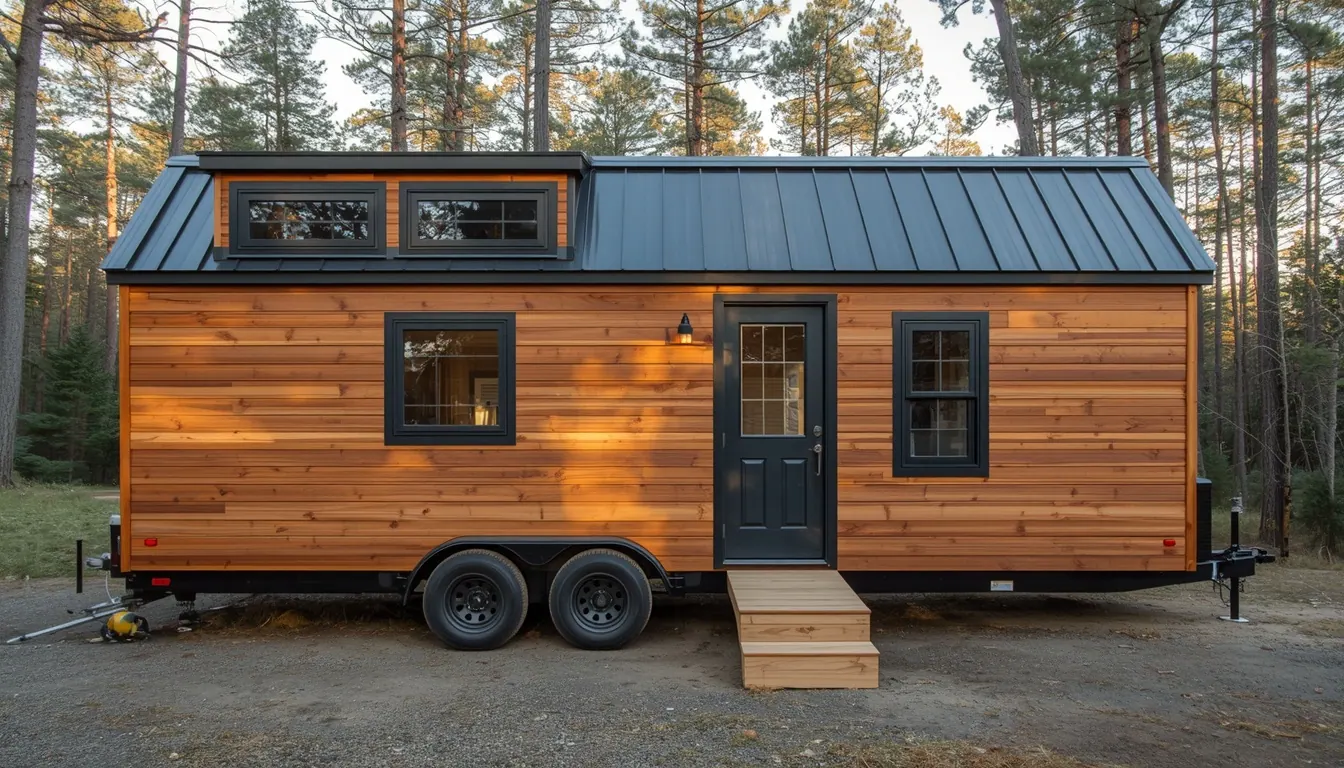
Vale
8'6" × 24' · ~284 sq ft · Sleeps 2 · 1 bed + loft
RVIA/NOAH + NHTSA
10–12 weeks · weekly photos
From $119,900 CAD
Indicative starting price in CAD. Your final USD price is confirmed at your consultation.
See the full model page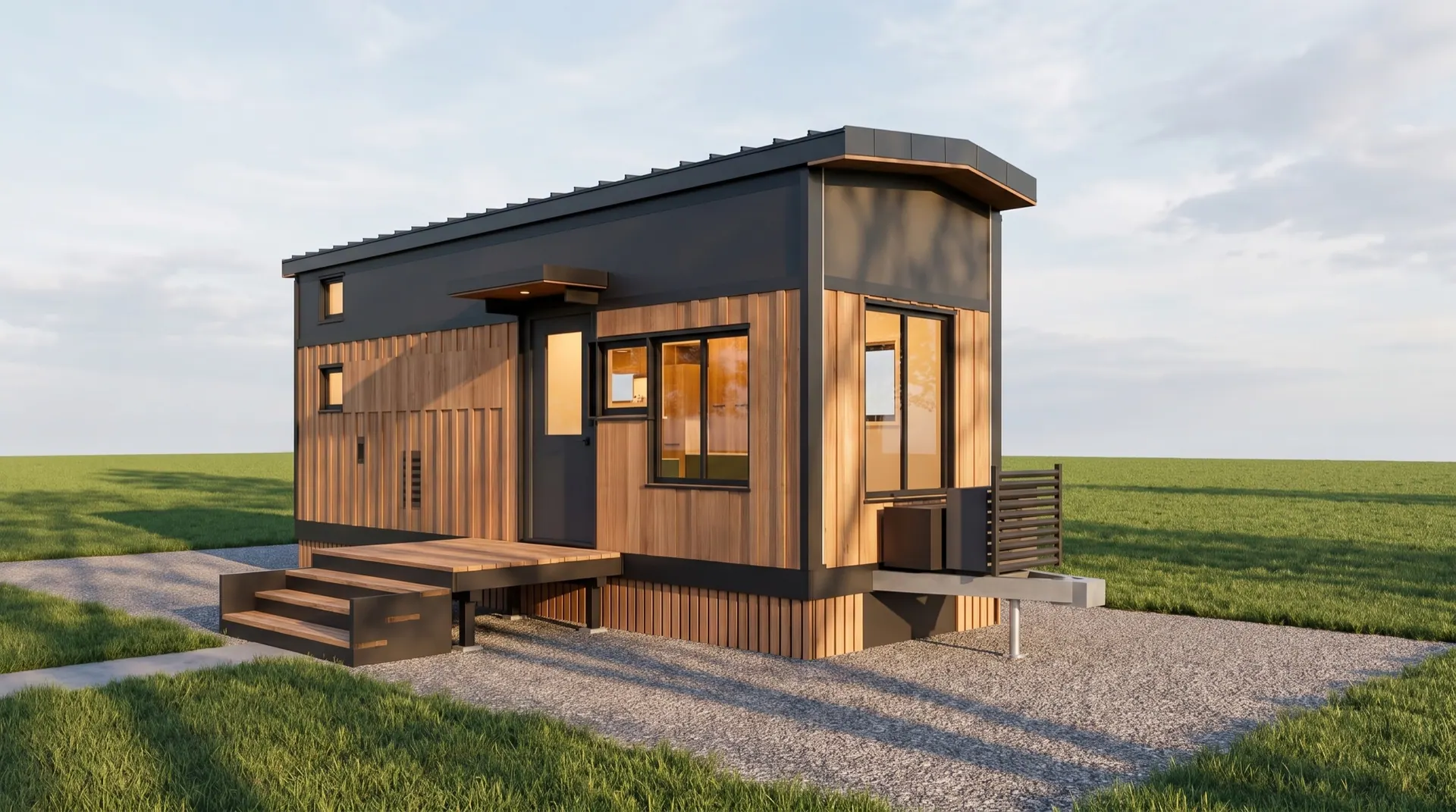
8'6" × 28'
RVIA/NOAH + NHTSA
Launch pricing announced at consultation · join the waitlist
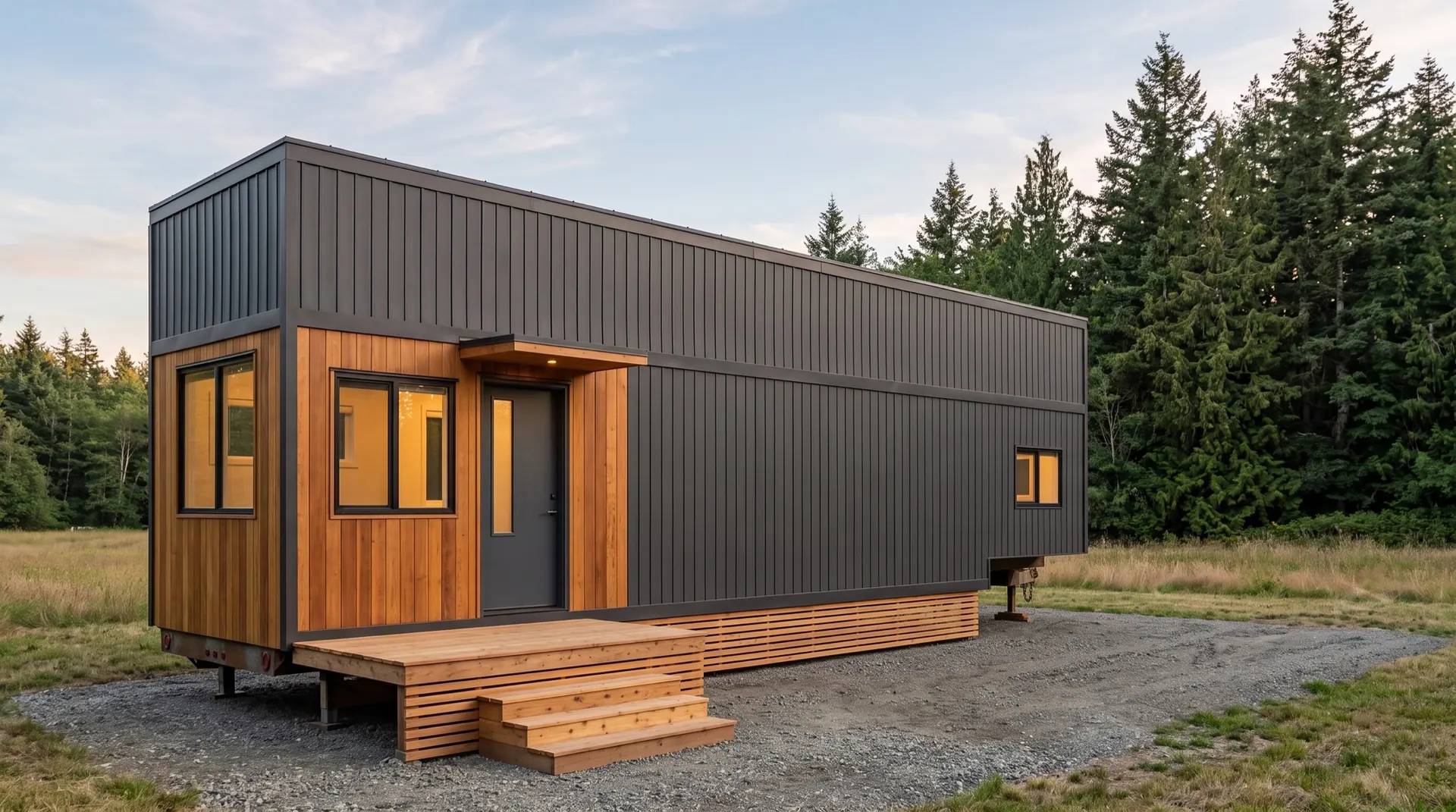
8'6" × 38' gooseneck
RVIA/NOAH + NHTSA
Launch pricing announced at consultation · join the waitlist
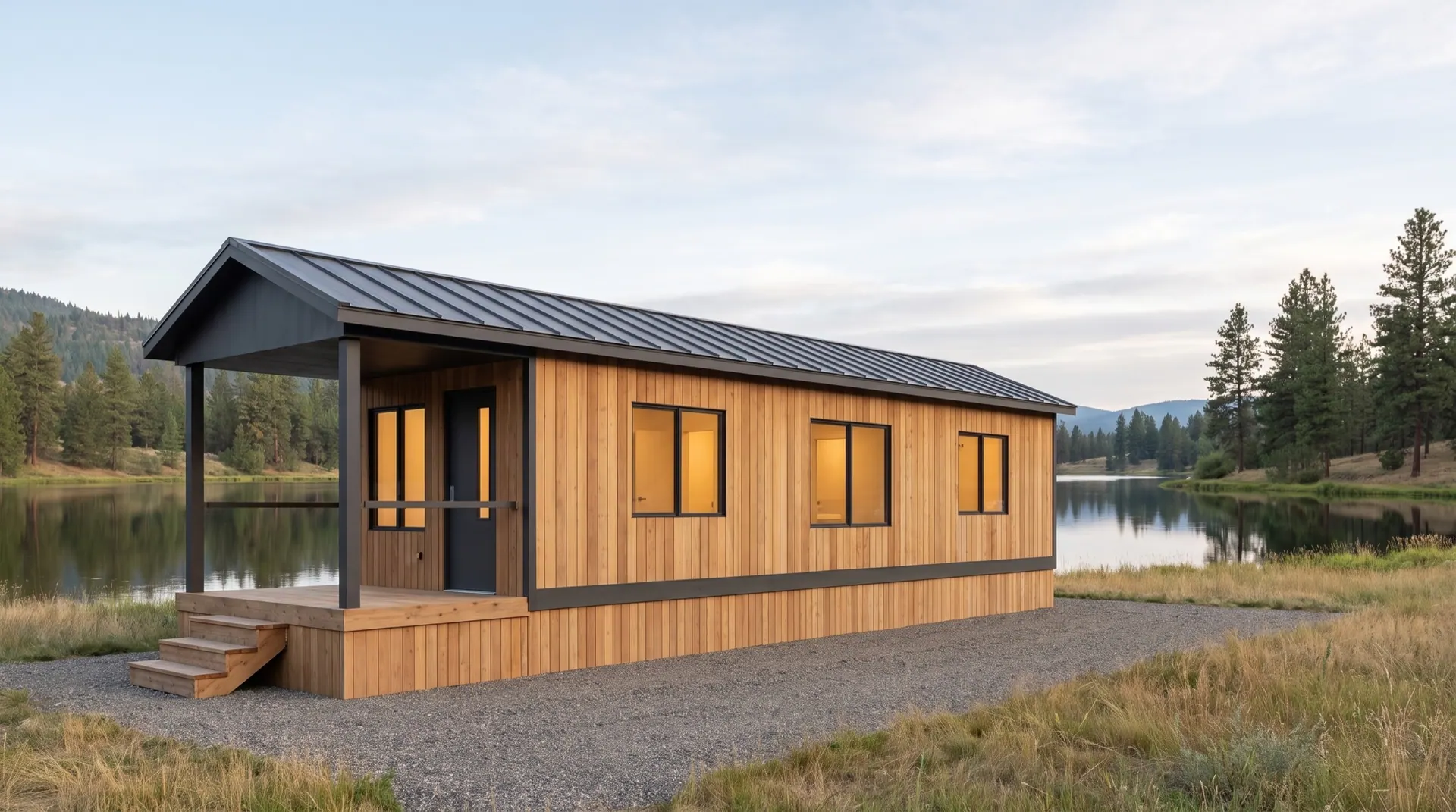
10'6" × 36'
ANSI A119.5 park model
Launch pricing announced at consultation · join the waitlist
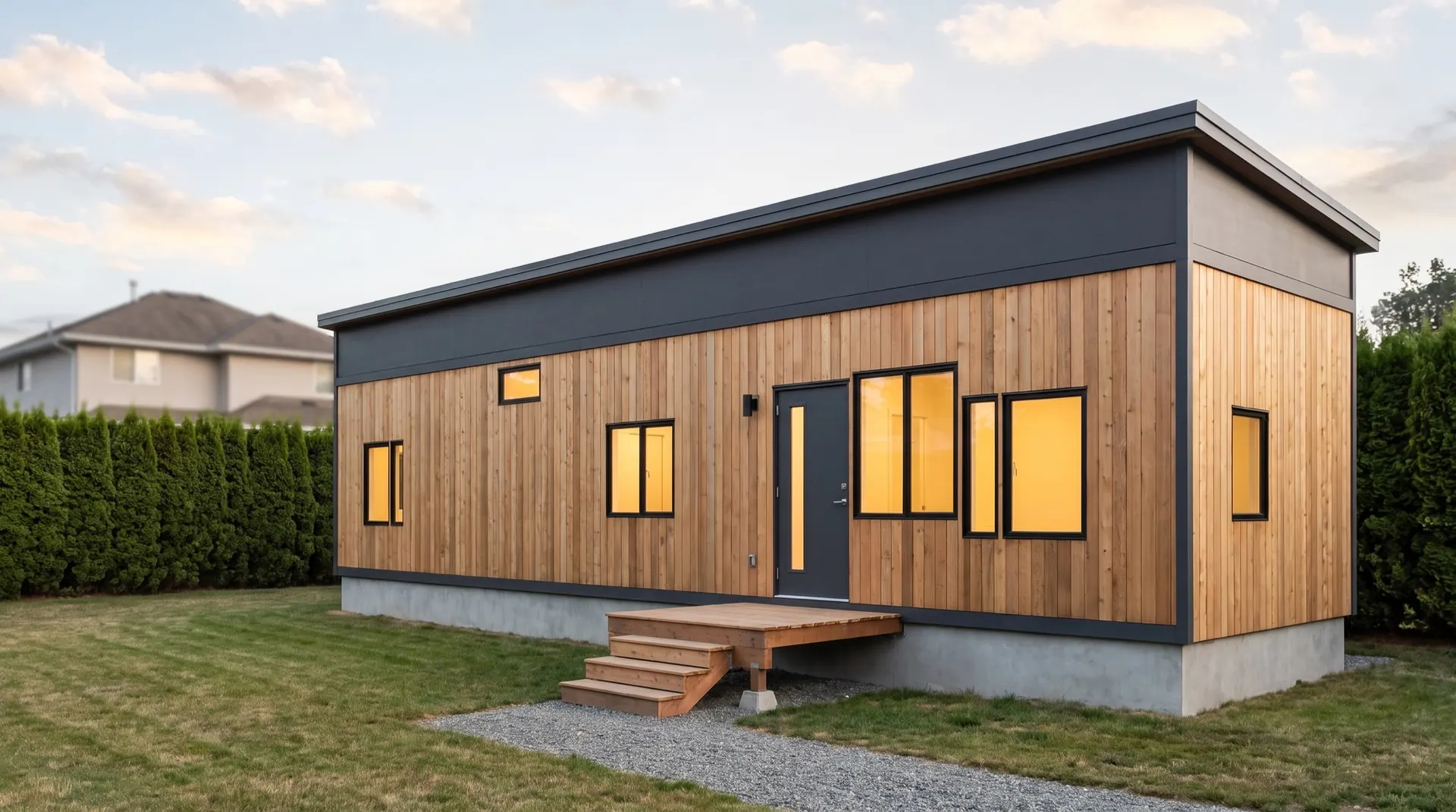
12' × 44'
IBC/IRC modular
Launch pricing announced at consultation · join the waitlist
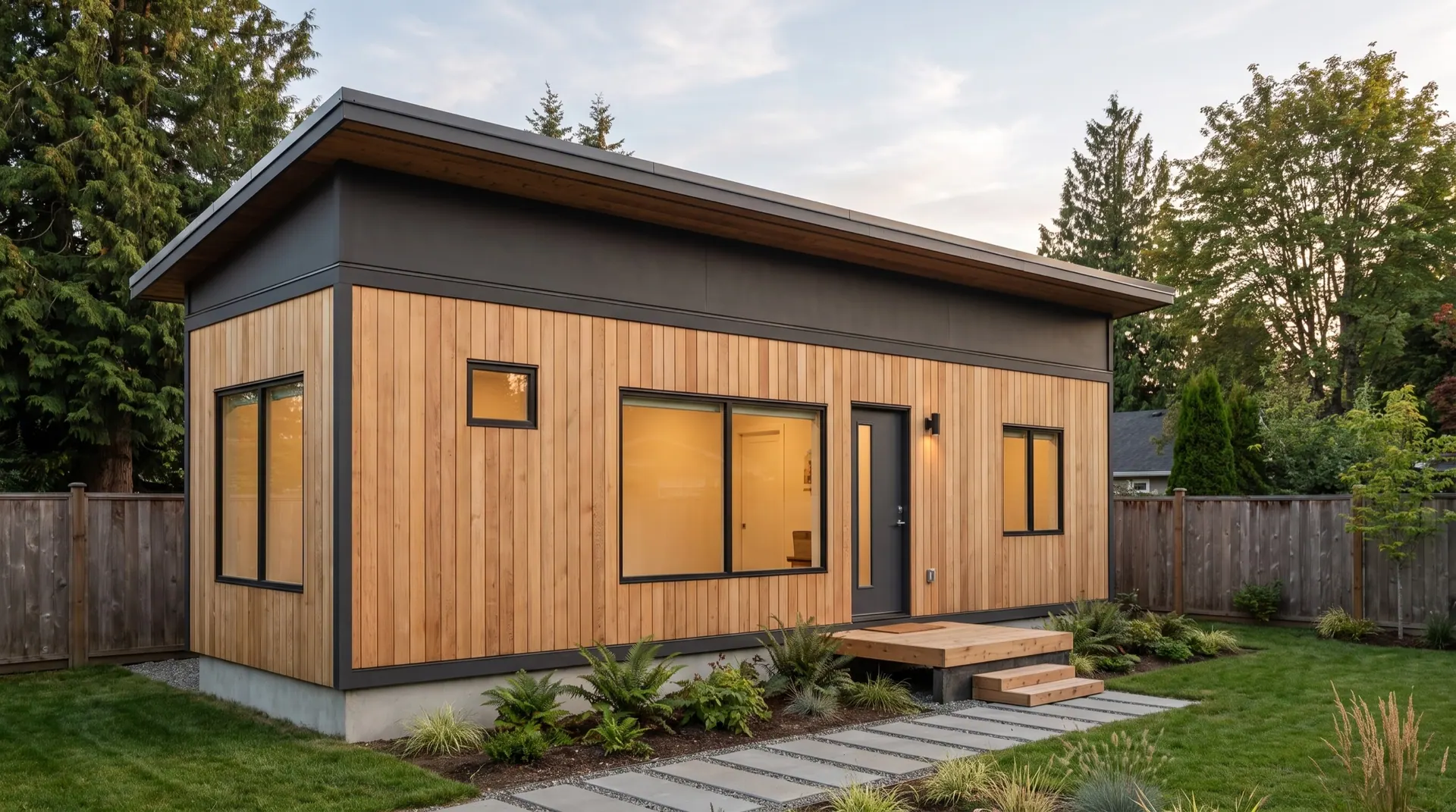
10' × 32'
IBC/IRC modular + Appendix Q
Launch pricing announced at consultation · join the waitlist
02 — Climate + code
Engineered for North Dakota’s conditions
Every KYRAX home shipped to North Dakota is sized to the actual code and climate values for your site, not a generic climate package.
| Building code | The North Dakota State Building Code's 2026 edition adopts the 2024 I-Code family, effective 1 January 2026; only a city, township or county that elects to administer and enforce a building code is bound by it, and it may amend the code to conform to local needs (NDCC 54-21.3-03(6)). No appendices are adopted, so the IRC tiny house appendix is not part of the state code unless a jurisdiction adopts it specifically (NDAC 108-01-01-14) |
| Frost depth | Not set statewide. Frost depth comes from your jurisdiction through IRC Table R301.2; the state's amendments add exemptions instead (free-standing accessory structures and decks need not carry footings below the frost line) |
| Snow load | Not set statewide. Ground snow load is a local value under IRC Table R301.2; no state amendment publishes county figures |
| Enforcement | Local jurisdictions that elect to run a building code permit and inspect; the Department of Commerce is not an enforcement agency. Its Local Code Enforcement Directory, headed as of 2022, lists 12 counties and about 120 cities, and advises confirming with the local governing body because the list is not exhaustive. NDCC 54-21.3-04(2)(a) exempts buildings that are neither heated nor cooled from the chapter |
| Design wind | Open prairie exposure is the norm, which raises effective wind demand on a design well above what a sheltered site would experience |
Plan for deep frost and real snow, but get the numbers locally, and confirm first whether anyone is enforcing a code where you are building. North Dakota's state amendments leave frost depth and ground snow load to the jurisdiction through the IRC's climatic design table, so the governing figures come from your building department, not a state schedule. Winters here are among the coldest on our delivery map and local values reflect that. We confirm your jurisdiction's frost depth and snow load before engineering, and we treat any statewide figure quoted online with suspicion, because the state code does not publish one.
03 — Regulations
North Dakota tiny home regulations
How tiny homes are classified
A home built to the state code on a permanent foundation is a building, permitted and inspected by the local jurisdiction where one elects to administer a building code; a factory-built home must be built to the state code whether or not the receiving jurisdiction enforces one.
State-specific note
The State Building Code's 2026 edition, on the 2024 I-Codes, took effect on 1 January 2026, but enforcement is a local election: a city, township or county that chooses to administer a building code must adopt the state code and may amend it, and one that does not is not required to run one at all. A modular residential structure or a prebuilt home placed in the state must be constructed in compliance with the state building code regardless, plus any amendments the receiving jurisdiction has made. Frost depth and ground snow load are set locally through IRC Table R301.2.
The State Building Code is published through the Division of Community Services: the 2026 edition adopts the 2024 I-Code family and took effect on 1 January 2026, replacing the 2021-based 2023 edition. Four things about it matter for a small home. First, enforcement is optional. Under NDCC 54-21.3-03(6) a city, township or county that elects to administer and enforce a building code must adopt and enforce the state code, and may amend it to conform to local needs; nothing requires a jurisdiction to elect at all, and the Department of Commerce publishes a directory of those that have. Second, the appendices are out: NDAC 108-01-01-14 keeps the appendix chapters of the IBC, IRC, IMC and IFGC out of the state building code unless specifically adopted, so the IRC tiny house appendix does not apply by state adoption, and the International Property Maintenance Code and International Fire Code are not part of the state code either. Third, a modular residential structure or a prebuilt home placed anywhere in the state must be built to the state code under 54-21.3-03(7), with the receiving jurisdiction's amendments on top, and under 54-21.3-07 the factory is checked by a certified third-party inspector rather than by state or local inspectors during manufacturing. Fourth, the residential amendments impose no statewide structural values: no minimum footing depth and no county snow table appear anywhere in them, so frost and snow come from your jurisdiction through the IRC's climatic design table, and the frost-related amendments actually run the other way, adding exemptions so free-standing accessory structures and decks need not carry footings below the frost line. State law also exempts buildings that are neither heated nor cooled (NDCC 54-21.3-04(2)(a)), and exempts agricultural buildings unless they are a place of human habitation or for use by the public. Zoning and permitted uses remain local, under city, county and township authority that is itself expressly subject to chapter 54-21.3.
These are general state-level frameworks. Your specific lot, county and city amendments, and utility situation determine the permits you'll actually need. We confirm the details for your exact address before you order; the zoning lookup starts that.
04 — Delivery
Delivery to North Dakota
| Typical transit | Estimated 3-6 days from the Surrey, BC shop. Quoting is per site, and routing, customs clearance and oversize permits control the real timeline; treat the range as an estimate, not a schedule we guarantee |
| Route corridor | Runs south and east along the northern corridor, entering North Dakota on I-94 and US-2 for Fargo, Bismarck, Minot and Grand Forks |
| Common uses in region | Farm and acreage units, family housing on existing land, and homes engineered to the frost and snow values your jurisdiction publishes |
North Dakota is one of the closer US destinations from Surrey, BC by road. The schedule usually turns on the foundation: local frost depths are deep, site work has a real seasonal window, and in a state with these winters that window is narrow. We sequence delivery around the foundation and confirm the local frost and snow values, along with any local amendments, before engineering.
05 — Common questions
Tiny Home FAQs for North Dakota
Can I legally put a tiny home on my land in North Dakota?
In North Dakota, a KYRAX tiny home is typically classified as follows: A home built to the state code on a permanent foundation is a building, permitted and inspected by the local jurisdiction where one elects to administer a building code; a factory-built home must be built to the state code whether or not the receiving jurisdiction enforces one. Whether it may sit on a particular lot is a local zoning question, which is why we check your exact address before you order.
How much can I save versus a traditional home in North Dakota?
The typical home value in North Dakota is ~US$284K. Our flagship model, the Vale, starts at $119,900 CAD, a fraction of a conventional build (US pricing confirmed at your consultation). Common uses here are Farm and acreage units, family housing on existing land, and homes engineered to the frost and snow values your jurisdiction publishes.
How long does delivery to North Dakota take from your BC facility?
We ship from Surrey, British Columbia: Runs south and east along the northern corridor, entering North Dakota on I-94 and US-2 for Fargo, Bismarck, Minot and Grand Forks. Estimated 3-6 days from the Surrey, BC shop. Quoting is per site, and routing, customs clearance and oversize permits control the real timeline; treat the range as an estimate, not a schedule we guarantee. Customs and oversize-load permits set the final window.
How does North Dakota's climate change how my tiny home is built?
Each build is engineered to the values that govern here: frost depth: Not set statewide. Frost depth comes from your jurisdiction through IRC Table R301.2; the state's amendments add exemptions instead (free-standing accessory structures and decks need not carry footings below the frost line); snow load: Not set statewide. Ground snow load is a local value under IRC Table R301.2; no state amendment publishes county figures; design wind: Open prairie exposure is the norm, which raises effective wind demand on a design well above what a sheltered site would experience.
What building code and certification apply in North Dakota?
North Dakota builds to The North Dakota State Building Code's 2026 edition adopts the 2024 I-Code family, effective 1 January 2026; only a city, township or county that elects to administer and enforce a building code is bound by it, and it may amend the code to conform to local needs (NDCC 54-21.3-03(6)). No appendices are adopted, so the IRC tiny house appendix is not part of the state code unless a jurisdiction adopts it specifically (NDAC 108-01-01-14). Every KYRAX home is built to its US certification pathway: RVIA or NOAH inspection for tiny homes on wheels, ANSI A119.5 for park models, IBC/IRC for modular, with third-party certification for your destination market written into the build contract and confirmed before delivery.
Can you live off-grid in North Dakota?
North Dakota does not decide that at state level, and no state does: zoning, the building code and the health authority each decide part of it locally. What North Dakota does set is how the home is classified: A home built to the state code on a permanent foundation is a building, permitted and inspected by the local jurisdiction where one elects to administer a building code; a factory-built home must be built to the state code whether or not the receiving jurisdiction enforces one. That usually settles it, because a home treated as a vehicle is often barred as a permanent dwelling however it is powered, while a modular home on a foundation may be allowed on the same parcel. We have not verified septic or utility-connection rules for North Dakota; your building department and health authority can confirm them.
How deep does a North Dakota foundation have to go?
Whatever your jurisdiction requires, and only your jurisdiction can say. The state code sets no minimum footing depth; frost depth is a local value under IRC Table R301.2, and the state's own amendments add exemptions for free-standing accessory structures and decks. Figures like a statewide 60 inch minimum circulate online, but they do not appear in the state code. North Dakota winters justify deep footings; the exact number comes from your building department, and we confirm it before engineering.
What snow load does a North Dakota build have to meet?
Your jurisdiction's published value. The state amendments contain no county snow load table, so ground snow load comes from the IRC's climatic design table as completed locally. We confirm the figure with your building department and engineer the roof to it. Treat any county-by-county table you find online with caution, because the state code does not publish one.
06 — Popular locations
Popular Locations in North Dakota
- Fargo
- Bismarck
- Grand Forks
- Minot
- West Fargo
- Williston
- Dickinson
07 — Helpful resources
Helpful Resources
Guide
Tiny Home Communities in 2026: How They Work
Tiny home communities solve the biggest challenge of ownership: where to legally put your home. How they work, what they cost, and how to find a good one.
Guide
Tiny Houses on Wheels: Buyer's Guide (2026)
Everything you need to know about buying, parking, and living in a tiny house on wheels, from trailer specs and towing to the zoning realities.
Guide
Tiny Home Financing: Every Option (2026)
Compare CMHC-backed mortgages, RV-style and chattel loans, HELOCs, and personal loans, plus how CSA A277/Z240 certification decides what you qualify for.
08 — Sources
Where these facts come from
Each statement above links to the authority it came from.
NDCC 54-21.3-03: (4) neither the state building code nor a city, township or county code may require fire sprinklers in a single family dwelling or a residential building of no more than two dwelling units; (5) for manufactured homes the state building code consists of 24 CFR 3280; (6) the governing body of a city, township, or county that elects to administer and enforce a building code shall adopt and enforce the state building code, and may amend it to conform to local needs; (7) a modular residential structure or a prebuilt home placed in the state must be constructed in compliance with the state building code, and with the amendments adopted by a jurisdiction that has amended it
ndlegis.govNDCC 54-21.3-04: buildings which are neither heated nor cooled are exempt from the chapter, as is any building used for agricultural purposes unless a place of human habitation or for use by the public. 54-21.3-05: a city or township may administer and enforce the code only within its jurisdictional area and a county only where no city or township administers it. 54-21.3-07: a factory-built modular residential or commercial structure must be inspected during manufacturing by a certified third party, and the section does not apply to a factory manufacturing fewer than two structures per year
ndlegis.govNorth Dakota Department of Commerce, Building Codes: Community Services is not involved in the enforcement of the State Building Code, which is the responsibility of jurisdictions that elect to adopt and enforce building codes; on 11 September 2025 eligible cities, counties and Building Code Advisory Committee members adopted the 2024 IBC, IRC, IMC and IFGC plus the 2024 IECC and IEBC, in effect 1 January 2026
commerce.nd.gov2026 North Dakota State Building Code book: the code consists of the 2024 IBC, IRC, IMC, IFGC, IECC and IEBC effective 1 January 2026; NDAC 108-01-01-14, the appendix chapters of the IBC, IRC, IMC and IFGC are not part of the state building code unless specifically adopted, carried under the heading NO APPENDICES ARE ADOPTED; the State Building Code does not include the International Property Maintenance Code or the International Fire Code; NDAC 108-01-01-04(2), the chapter applies to all cities, townships and counties that elect to adopt and enforce building codes; the frost amendments add exemptions for free-standing accessory structures and decks and set no statewide footing depth or county snow table
medialibrary.nd.govNorth Dakota Department of Commerce, Local Code Enforcement Directory, headed CODE ENFORCING JURISDICTIONS AS OF 2022: 12 counties listed (Adams, Billings, Burleigh, Dunn, Grand Forks, Hettinger, McKenzie, Morton, Mountrail, Stark, Williams, Ward) and about 120 cities; the Department's note states that jurisdictions not on the list may have elected to adopt the State Building Code and advises contacting the local governing body to confirm
commerce.nd.govNDCC 39-01-01(45) and 57-55-01: a mobile home is a structure built on a permanent chassis, ordinarily designed for human living quarters, owned or used as a residence, which is either attached to utility services or twenty-seven feet or more in length. 57-55-01.1: the owner must file for a mobile home tax permit with the county director of tax equalization within ten days after the home is acquired, moved, or first brought into the state. 57-55-10(2): exceptions, including a home permanently attached to a foundation and assessed as real property where the owner owns the land or holds a twenty year recordable lease, and a park model trailer used only for seasonal or recreational living quarters and not as a primary residence
ndlegis.govNDCC 40-47-01 (city), 11-33-01 and 11-33-03(3) (county) and 58-03-11 (township): each may regulate the height, number of stories and size of buildings and structures and the location and use of buildings, subject to chapter 54-21.3
ndlegis.gov2023 North Dakota State Building Code book (2021 I-Codes), superseded 1 January 2026
commerce.nd.govNorth Dakota housing market data, 2026
zillow.comNorth Dakota median sale price data, 2026
redfin.comNorth Dakota housing market trends, 2026
houzeo.com
Get a Free Quote for North Dakota
Tell us about your project and we’ll provide a detailed quote including ND-specific delivery, certification, and setup guidance.