IL · USA — delivered from Surrey, BC
Tiny Homes for Sale in Illinois
Illinois has no single statewide building code for houses, and a 2025 change is often described as if it created one. What the Capital Development Board Act requires, from 1 January 2025, is that a city or county with a building code regulate structural design at least as stringently as a baseline edition of the International Residential Code. Areas with no adopted code still exist. There, the Illinois Residential Building Code Act writes a code into the construction contract. The energy code is different: it applies statewide, and for houses most local governments may not make it weaker or stricter. KYRAX builds in Surrey, BC and delivers into Illinois.
US buyers: certification for your market is written into the build contract. See how certification works and US financing.
01 — Models available here
Models Available in Illinois
Now taking reservations
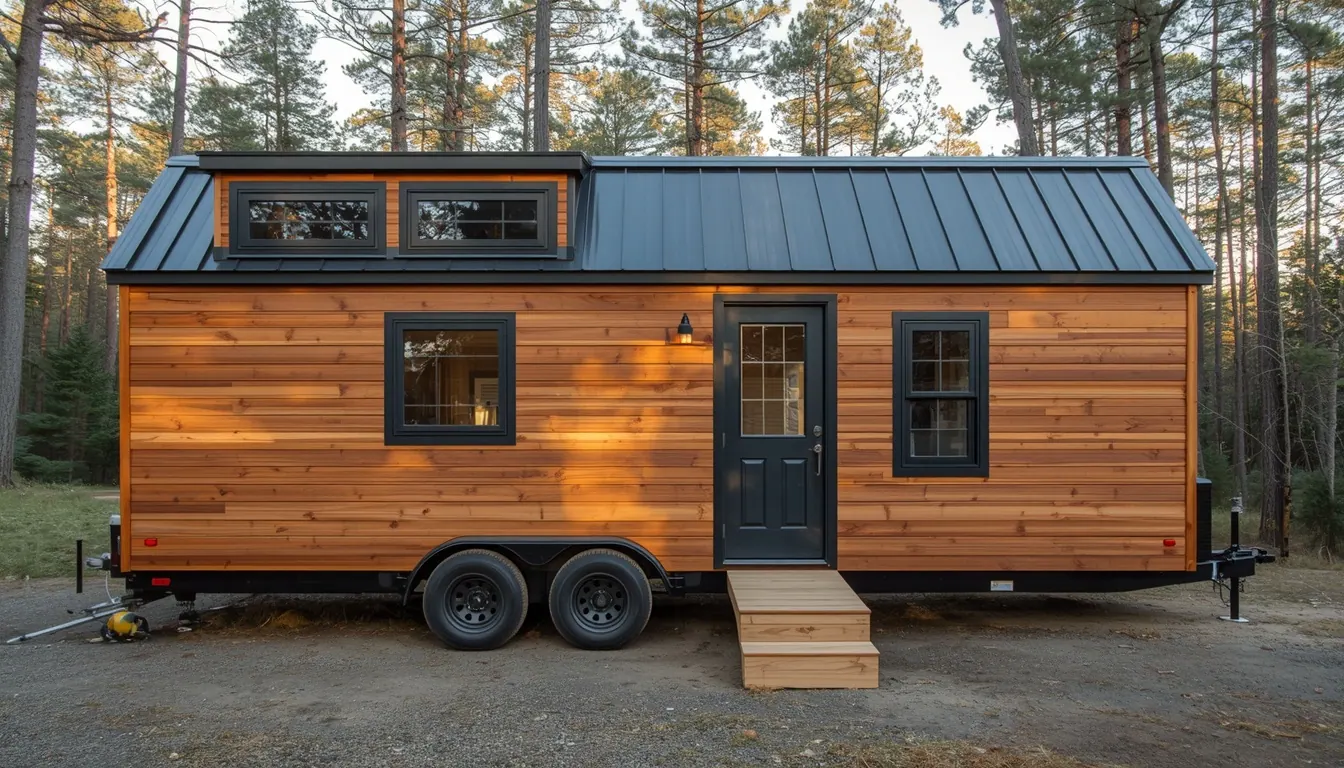
Vale
8'6" × 24' · ~284 sq ft · Sleeps 2 · 1 bed + loft
RVIA/NOAH + NHTSA
10–12 weeks · weekly photos
From $119,900 CAD
Indicative starting price in CAD. Your final USD price is confirmed at your consultation.
See the full model page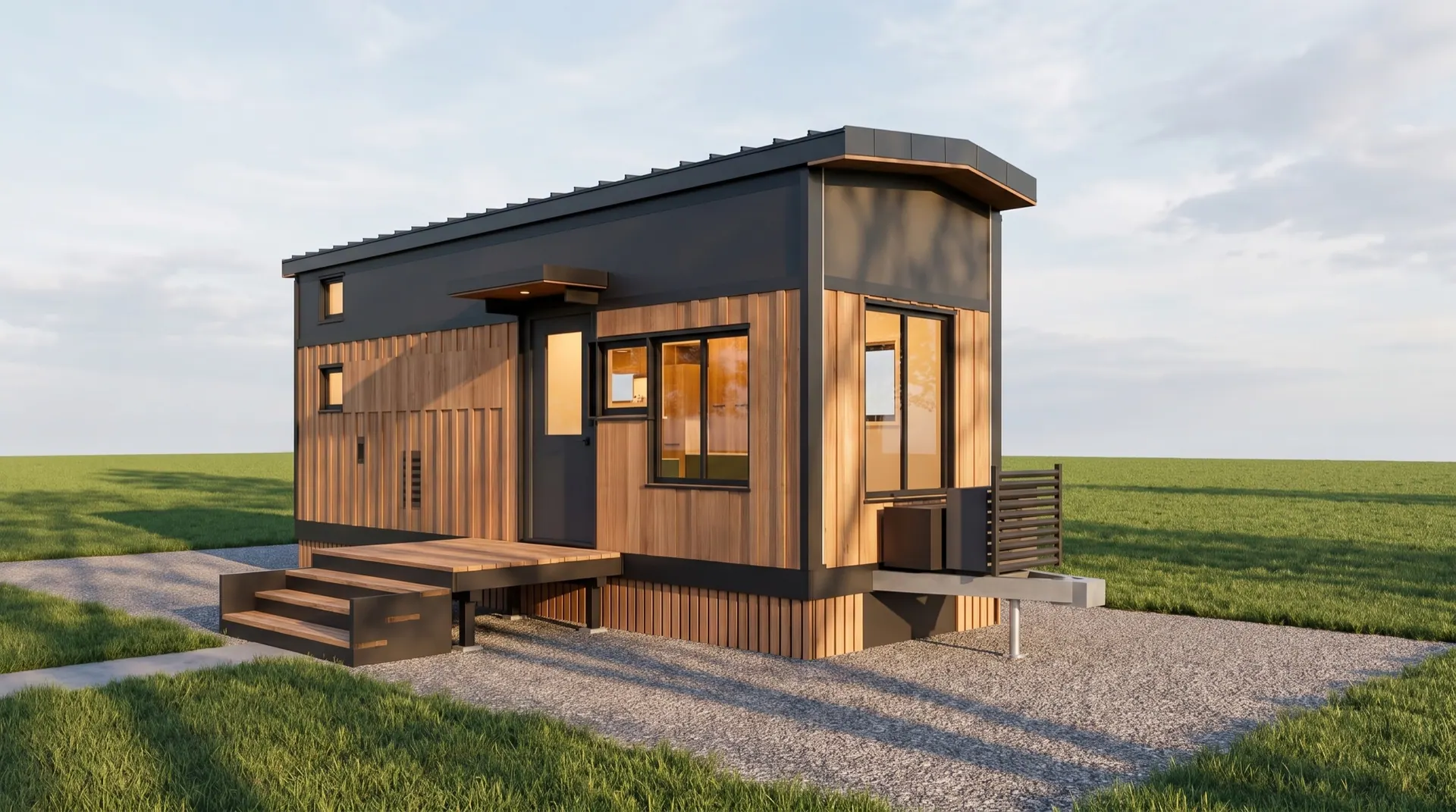
8'6" × 28'
RVIA/NOAH + NHTSA
Launch pricing announced at consultation · join the waitlist
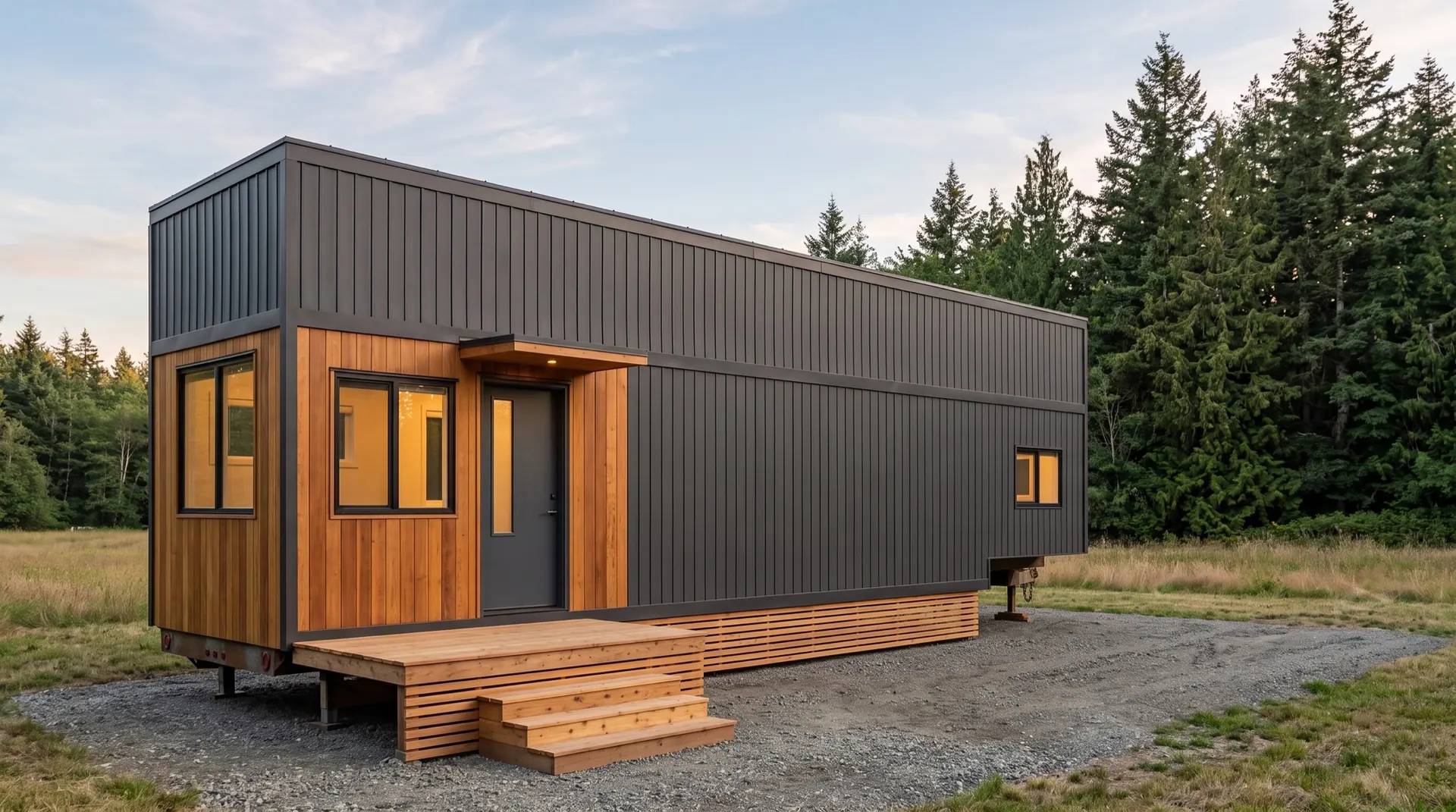
8'6" × 38' gooseneck
RVIA/NOAH + NHTSA
Launch pricing announced at consultation · join the waitlist
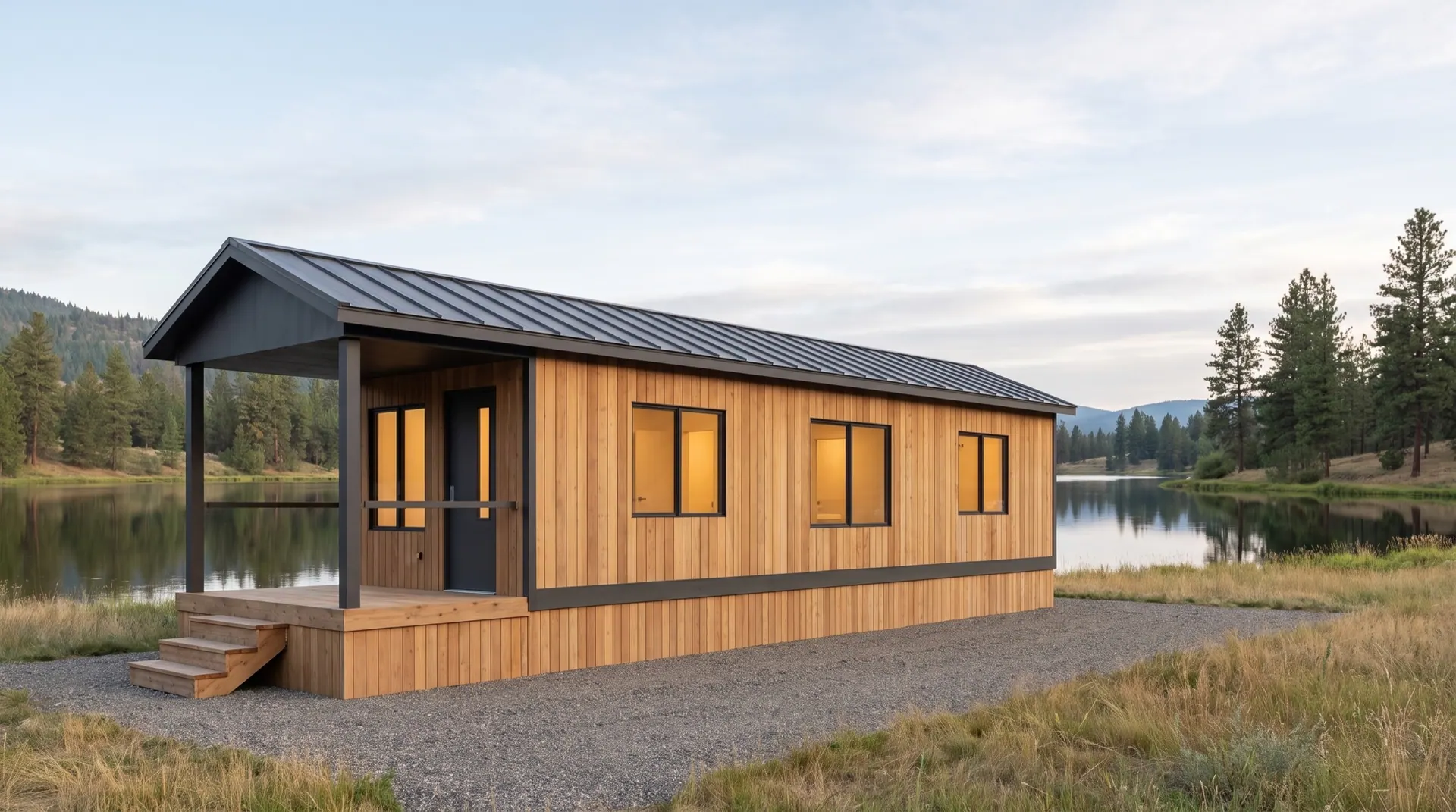
10'6" × 36'
ANSI A119.5 park model
Launch pricing announced at consultation · join the waitlist
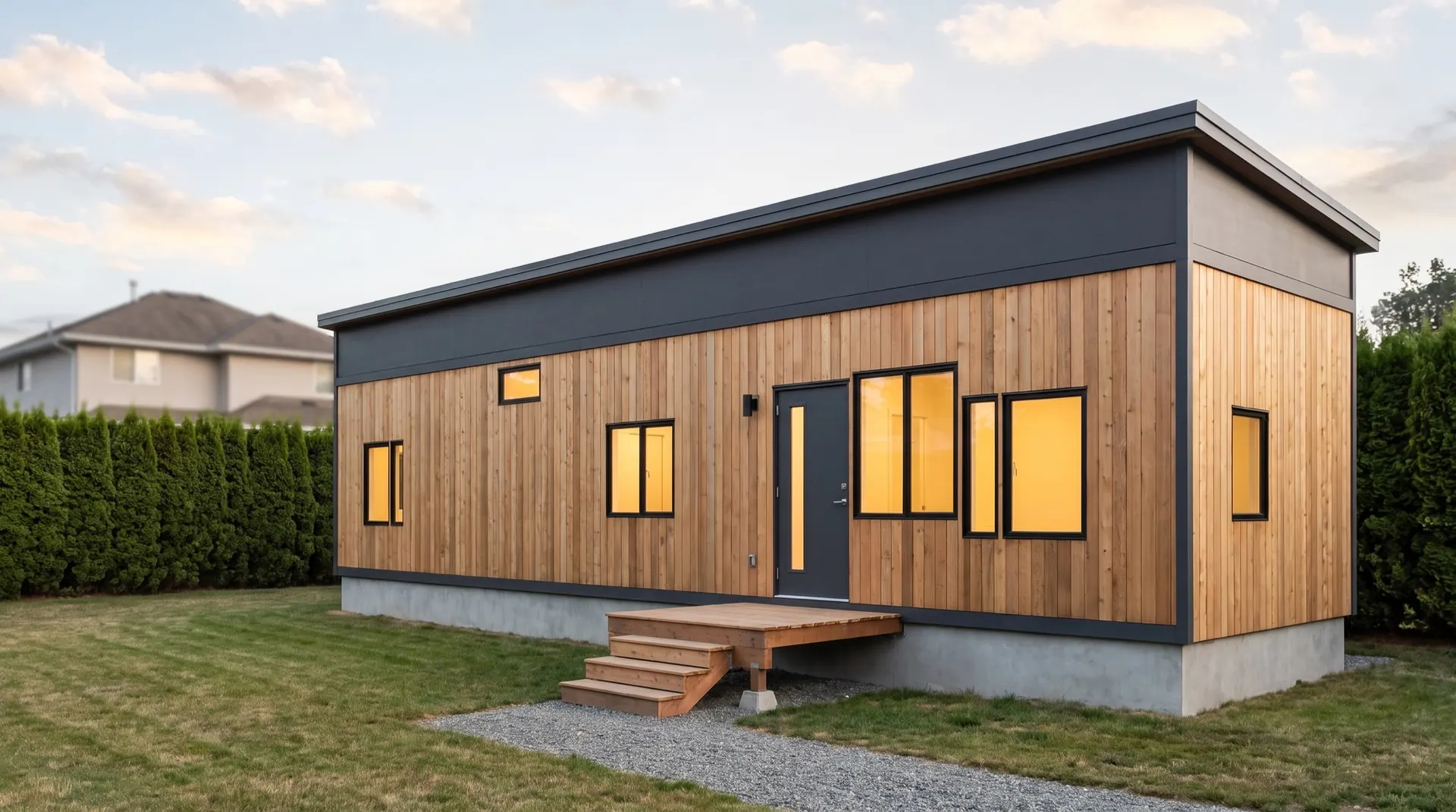
12' × 44'
IBC/IRC modular
Launch pricing announced at consultation · join the waitlist
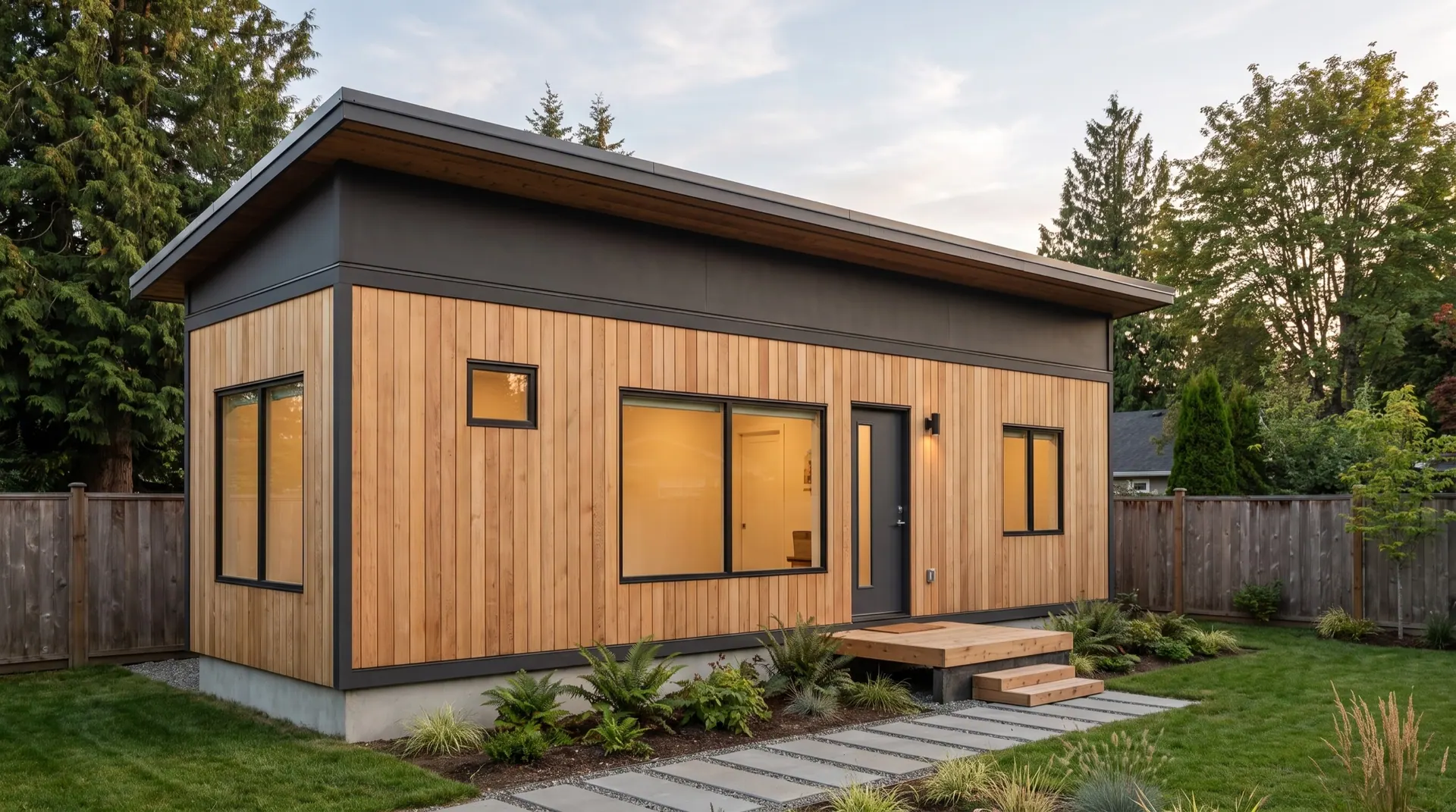
10' × 32'
IBC/IRC modular + Appendix Q
Launch pricing announced at consultation · join the waitlist
02 — Climate + code
Engineered for Illinois’s conditions
Every KYRAX home shipped to Illinois is sized to the actual code and climate values for your site, not a generic climate package.
| Building code | No single statewide building code for houses. Since 1 January 2025 a municipal or county building code must regulate the structural design of residential buildings at least as stringently as the baseline residential code (20 ILCS 3105/10.18), and where no residential code has been adopted, the International Residential Code applies through the construction contract (815 ILCS 670/15) |
| Baseline codes | The baseline residential code is the edition of the International Residential Code first published in the current year or the preceding nine calendar years with the least restrictive provisions for structural design; the same test applies to the International Building Code, including Appendix G, and the International Existing Building Code for other buildings |
| Energy code | The Illinois Energy Conservation Code applies statewide to new residential and commercial construction, including where a local government does not regulate energy standards. The 2024 IECC with Illinois amendments took effect on 30 November 2025 |
| Energy code variation | For residential buildings a local government may not regulate energy standards either less or more stringently than the state code. The exceptions, which may be more stringent: a municipality of 1,000,000 or more people, a municipality that has adopted the Illinois Stretch Energy Code, and a local government that had equivalent or stricter standards in place by 15 May 2009 (20 ILCS 3125/45) |
| Design values | Snow, frost and wind values come from the adopted code and local practice; check which figures your jurisdiction enforces |
Illinois still has areas where no city or county building code has been adopted, and state law calls them non-building code jurisdictions. Two rules cover the gap. Where a local code exists, since 1 January 2025 it must regulate structural design at least as stringently as the baseline International Residential Code, so the edition can differ from one jurisdiction to the next but not fall below that floor. Where none exists, the builder and buyer of a new house agree on a residential code in the contract, and the current International Residential Code applies if they do not. The energy code is the constant: it applies statewide. We confirm whether your jurisdiction has a code, which edition it enforces, and the applicable design values before engineering.
03 — Regulations
Illinois tiny home regulations
How tiny homes are classified
A home built to the locally adopted code on a permanent foundation is a dwelling under that code, and where no residential code has been adopted the International Residential Code applies through the construction contract.
State-specific note
Illinois has no single statewide building code for houses. Under the Capital Development Board Act a municipal or county building code must, from 1 January 2025, regulate the structural design of residential buildings at least as stringently as the baseline International Residential Code. Where no residential code has been adopted, the Illinois Residential Building Code Act makes the builder and buyer adopt one in the construction contract, with the current International Residential Code as the default. Separately, the Illinois Energy Conservation Code applies statewide.
Illinois is often described in one of two wrong ways: as a state with no building codes, or as a state that adopted one statewide code in 2025. The statutes say something in between. A city or county chooses whether to adopt a building code. If it has one, the Capital Development Board Act requires that code, from 1 January 2025, to regulate structural design at least as stringently as a baseline: the edition of the International Residential Code, published in the current year or the preceding nine, with the least restrictive structural provisions. If it has none, the area is a non-building code jurisdiction. A new house there is covered by the Illinois Residential Building Code Act, which requires the construction contract to adopt the International Residential Code or a municipal or county code in force within 100 miles, and makes the current International Residential Code the default when the contract is silent. The Illinois Energy Conservation Code applies statewide, follows the latest published IECC with amendments adopted by the Capital Development Board, and for residential buildings most local governments are barred from adopting standards either less or more stringent. A home built in a factory needs Department of Public Health approval and the Illinois seal. Zoning remains local.
These are general state-level frameworks. Your specific lot, county and city amendments, and utility situation determine the permits you'll actually need. We confirm the details for your exact address before you order; the zoning lookup starts that.
04 — Delivery
Delivery to Illinois
| Typical transit | A 5-8 day estimate from our shop in Surrey, BC. Timing shifts with customs clearance, routing and oversize permits; the quote is site-specific and the estimate is not a guarantee |
| Route corridor | Across the border and eastward on the northern corridor, arriving in Illinois via I-90, I-80 and I-55 to Chicago, Rockford, Peoria and Springfield |
| Common uses in region | Family and multigenerational units across suburban and rural lots, cabins in lake and river country, and code-built homes on permanent foundations |
Illinois has strong highway access on I-90, I-80 and I-55. Cross-border customs clearance and oversize permitting are the main variables in timing. One piece of preparation deserves care: confirm whether your city or county has adopted a building code and which edition it enforces, since Illinois leaves that choice to each jurisdiction.
05 — Common questions
Tiny Home FAQs for Illinois
Can I legally put a tiny home on my land in Illinois?
In Illinois, a KYRAX tiny home is typically classified as follows: A home built to the locally adopted code on a permanent foundation is a dwelling under that code, and where no residential code has been adopted the International Residential Code applies through the construction contract. Whether it may sit on a particular lot is a local zoning question, which is why we check your exact address before you order.
How much can I save versus a traditional home in Illinois?
The typical home value in Illinois is ~US$299K. Our flagship model, the Vale, starts at $119,900 CAD, a fraction of a conventional build (US pricing confirmed at your consultation). Common uses here are Family and multigenerational units across suburban and rural lots, cabins in lake and river country, and code-built homes on permanent foundations.
How long does delivery to Illinois take from your BC facility?
We ship from Surrey, British Columbia: Across the border and eastward on the northern corridor, arriving in Illinois via I-90, I-80 and I-55 to Chicago, Rockford, Peoria and Springfield. A 5-8 day estimate from our shop in Surrey, BC. Timing shifts with customs clearance, routing and oversize permits; the quote is site-specific and the estimate is not a guarantee. Customs and oversize-load permits set the final window.
How does Illinois's climate change how my tiny home is built?
Each build is engineered to the values your jurisdiction enforces for your site, confirmed with your building department before the unit is engineered.
What building code and certification apply in Illinois?
Illinois builds to No single statewide building code for houses. Since 1 January 2025 a municipal or county building code must regulate the structural design of residential buildings at least as stringently as the baseline residential code (20 ILCS 3105/10.18), and where no residential code has been adopted, the International Residential Code applies through the construction contract (815 ILCS 670/15). Every KYRAX home is built to its US certification pathway: RVIA or NOAH inspection for tiny homes on wheels, ANSI A119.5 for park models, IBC/IRC for modular, with third-party certification for your destination market written into the build contract and confirmed before delivery.
Can you live off-grid in Illinois?
Illinois does not decide that at state level, and no state does: zoning, the building code and the health authority each decide part of it locally. What Illinois does set is how the home is classified: A home built to the locally adopted code on a permanent foundation is a dwelling under that code, and where no residential code has been adopted the International Residential Code applies through the construction contract. That usually settles it, because a home treated as a vehicle is often barred as a permanent dwelling however it is powered, while a modular home on a foundation may be allowed on the same parcel. We have not verified septic or utility-connection rules for Illinois; your building department and health authority can confirm them.
Is it true that parts of Illinois have no building code?
Yes, for the building code itself. Illinois law still defines non-building code jurisdictions: areas where the municipality or county has not adopted a building code. The change on 1 January 2025 is narrower than many summaries say. A city or county that has a code must now regulate the structural design of houses at least as stringently as a baseline edition of the International Residential Code. Where no residential code has been adopted, the Illinois Residential Building Code Act puts one into the contract: the builder and buyer agree on the International Residential Code or a local code in force within 100 miles, and the current International Residential Code applies if they do not. The state energy code and the Illinois Plumbing Code apply either way.
Can my Illinois municipality set its own energy requirements?
For houses, mostly no, and unusually it cannot go stricter either. The Illinois Energy Conservation Code applies statewide to new residential and commercial construction, and for residential buildings a local government may not regulate energy standards either less or more stringently than the state code. The statute lists exceptions that may be more stringent: a municipality of 1,000,000 or more people, a municipality that has adopted the Illinois Stretch Energy Code, and a local government that already had equivalent or stricter standards by 15 May 2009. The building code is a separate matter and is a local choice above the state's structural floor.
06 — Popular locations
Popular Locations in Illinois
- Chicago
- Aurora
- Naperville
- Rockford
- Springfield
- Peoria
- The Chicago suburbs
07 — Helpful resources
Helpful Resources
Guide
Tiny Home Zoning & Permits: The Basics
Zoning classifications, permit requirements, and how to navigate municipal approval: what to confirm before you buy a tiny home.
Guide
How to Choose a Tiny Home Builder
Choosing the wrong tiny home builder is expensive. Ask these 10 questions before you put down a deposit; the answers tell you what you need to know.
Guide
On-Grid vs. Off-Grid Tiny Homes: Which Setup?
Should your tiny home connect to municipal utilities or run independently? The costs, benefits, and practical trade-offs of each approach.
08 — Sources
Where these facts come from
Each statement above links to the authority it came from.
20 ILCS 3105/10.18(e): beginning 1 January 2025 any municipal or county building code must regulate the structural design of residential buildings in a manner at least as stringent as the baseline residential code, defined as the edition of the International Residential Code first published during the current year or preceding 9 calendar years with the least restrictive provisions for structural design
ilga.gov20 ILCS 3105/10.09-1: a non-building code jurisdiction is any area of the State in a municipality or county that has not adopted a building code; commercial buildings there need a certification of inspection; new residential construction is exempt from the Section except as provided in Section 15 of the Illinois Residential Building Code Act
ilga.gov815 ILCS 670/15, Illinois Residential Building Code Act: a contract to build new residential construction in a non-building code jurisdiction must adopt a residential building code agreed by the home builder and home purchaser (the International Residential Code, or a municipal or county code in effect within 100 miles); failing agreement the current edition of the International Residential Code is adopted as part of the contract by law
ilga.govCapital Development Board, Building Codes and Regulations: separate requirements for residential buildings in jurisdictions that have and have not adopted a building code; starting 1/1/25 local codes must regulate structural design at least as stringently as the IRC
cdb.illinois.gov20 ILCS 3125/15 and 3125/20, Energy Efficient Building Act: the Code is the minimum and maximum requirement for residential buildings in the State; where a unit of local government does not regulate energy efficient building standards, construction is subject to the Act
ilga.gov20 ILCS 3125/45(b): no unit of local government may regulate energy efficient building standards for residential buildings in a manner either less or more stringent than the Act, except pre-15 May 2009 adopters, municipalities that have adopted the Illinois Stretch Energy Code, and a municipality with a population of 1,000,000 or more, which may be more stringent
ilga.govCapital Development Board, Illinois Energy Conservation Code: the 2024 edition of the IECC as amended went into effect on 11/30/25
cdb.illinois.gov430 ILCS 115/2 and 115/4, Illinois Modular Dwelling and Mobile Structure Safety Act: the construction of modular dwelling units located in Illinois is regulated by the Department of Public Health; none may be sold or offered for sale in the State unless it bears a seal issued by the Department
ilga.govIllinois Energy Efficient Building Act requirements
epa.illinois.govIllinois typical home value approximately US$299K (Zillow ZHVI $298,871, June 2026)
zillow.com
Get a Free Quote for Illinois
Tell us about your project and we’ll provide a detailed quote including IL-specific delivery, certification, and setup guidance.